Spray Sunscreen vs Lotion for Snorkeling Tours in PCB

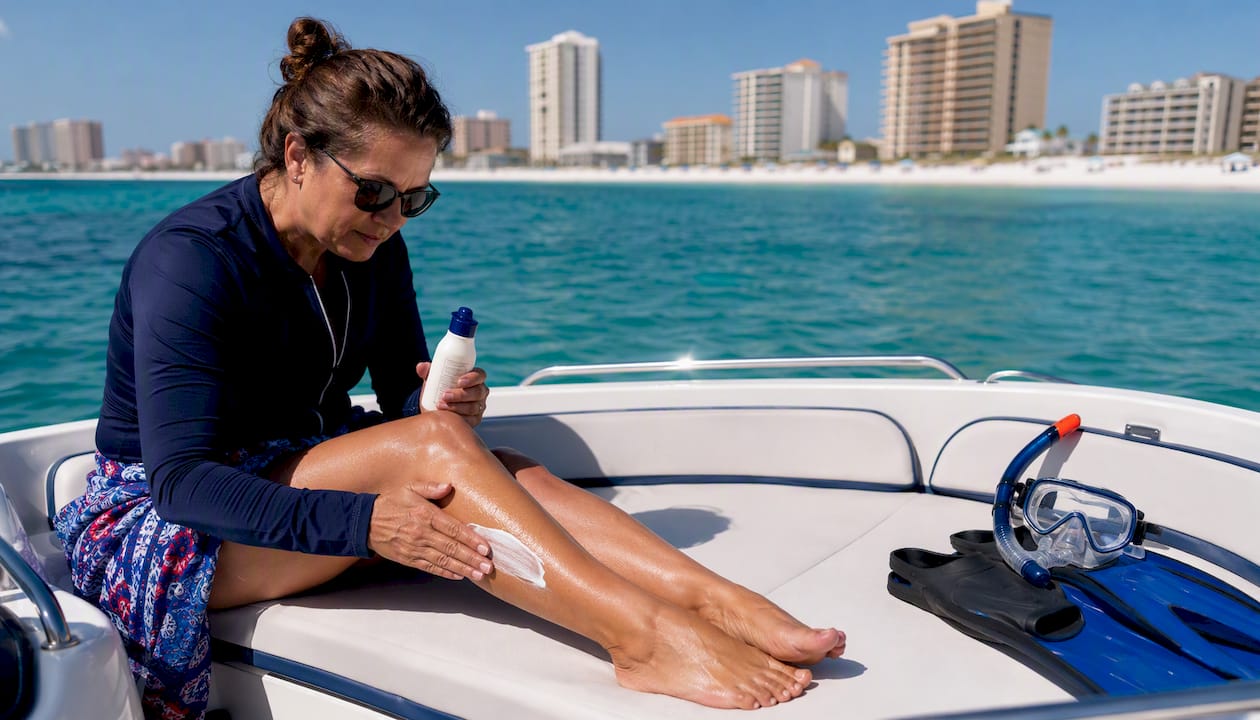
For a Panama City Beach boat or snorkeling trip, the best approach is not one product — it’s two layers. Wear a UPF 50+ rash guard on covered skin, and apply a broad-spectrum, water-resistant sunscreen (SPF 30 or higher) to everything exposed. That combination beats either option alone.
Quick TL;DR:
Rash guard first. A UPF 50+ garment blocks approximately 98% of UVA/UVB rays and won’t wash off between snorkel sets — no reapplication needed for covered skin.
Lotion for your face. The American Academy of Dermatology recommends against spraying sunscreen directly on the face. Use lotion there, always.
Spray is acceptable for body reapplication — but only if you rub it in after spraying. Skipping that step leaves gaps.
Pcbprestige guests spend 2–3 hours on open water near Shell Island. Sun exposure is constant, wind is real, and you’ll be wet. Pack both a lotion and a small spray for quick top-ups between snorkel sets.
Table of Contents
Why boats and snorkeling change everything about sunscreen
On land, sunscreen is pretty forgiving. On a boat, it isn’t. Water, sweat, wind, and toweling work together to strip protection faster than most people expect.
Even sunscreens labeled “water-resistant” are only tested for 40 or 80 minutes of water exposure before protection drops significantly. On a 3-hour private tour, you’ll cycle through the water multiple times. Each exit followed by towel-drying resets that clock.
Wind creates a specific problem for sprays. Aerosol mist can blow sideways off your skin before it even lands, especially on the bow or stern of a moving boat. Experts estimate that a meaningful share of sprayed product never reaches the skin at all unless you rub it in or spray into your hands first.
Stat worth knowing: A UPF 50+ rash guard blocks approximately 98% of UVA/UVB rays — and unlike sunscreen, it doesn’t wash off.
That’s why the layered approach matters. The rash guard handles covered skin reliably. Sunscreen handles the rest, with the understanding that reapplication is non-negotiable on a full day out.
Spray sunscreen vs lotion: how they compare on a boat
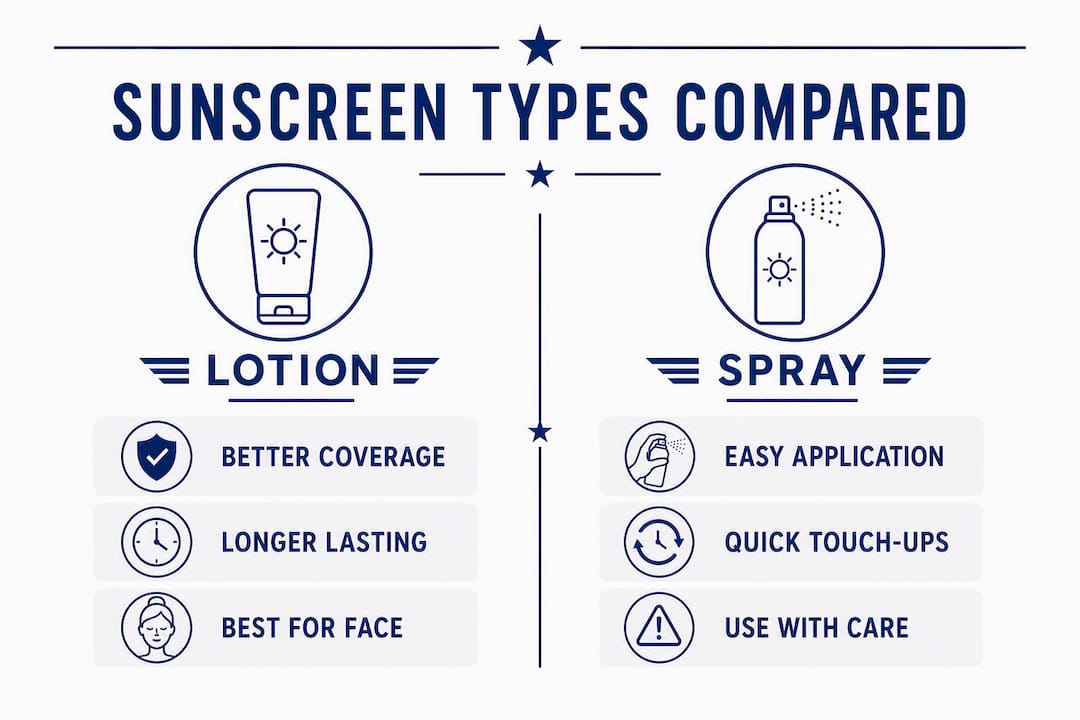
Factor | Lotion | Spray |
Coverage / protection | Even, visible, measurable | Uneven unless rubbed in; wind causes product loss |
Ease of application | Slower; requires hands | Fast; good for back of neck and scalp |
Water resistance | Same as labeled (40 or 80 min) | Same as labeled, but coverage gaps reduce real-world performance |
Face safety | Safe; recommended for face | Never spray directly on face; spray into hands first |
Reef / environmental safety | Mineral lotions are the safest option | Aerosol propellants add environmental concern beyond the formula |
Kids and sensitive skin | Mineral lotion preferred | Not ideal for children’s faces; acceptable on body if rubbed in |
Lotion advantages for marine use:
You can see where it’s been applied, which reduces missed spots on ears, neck, and feet.
Dermatologists note that lotion generally delivers more measurable coverage than spray, especially on windy days.
Mineral lotions (zinc oxide or titanium dioxide) sit on the skin surface and are less likely to irritate eyes after sweating.
Spray advantages for marine use:
Faster for reapplication between snorkel sets when your hands are wet.
Easier to reach the back of your neck, scalp, and shoulders solo.
Some people are more likely to actually reapply a spray than dig out a lotion tube. A sunscreen you use consistently beats a better formula sitting in your bag.
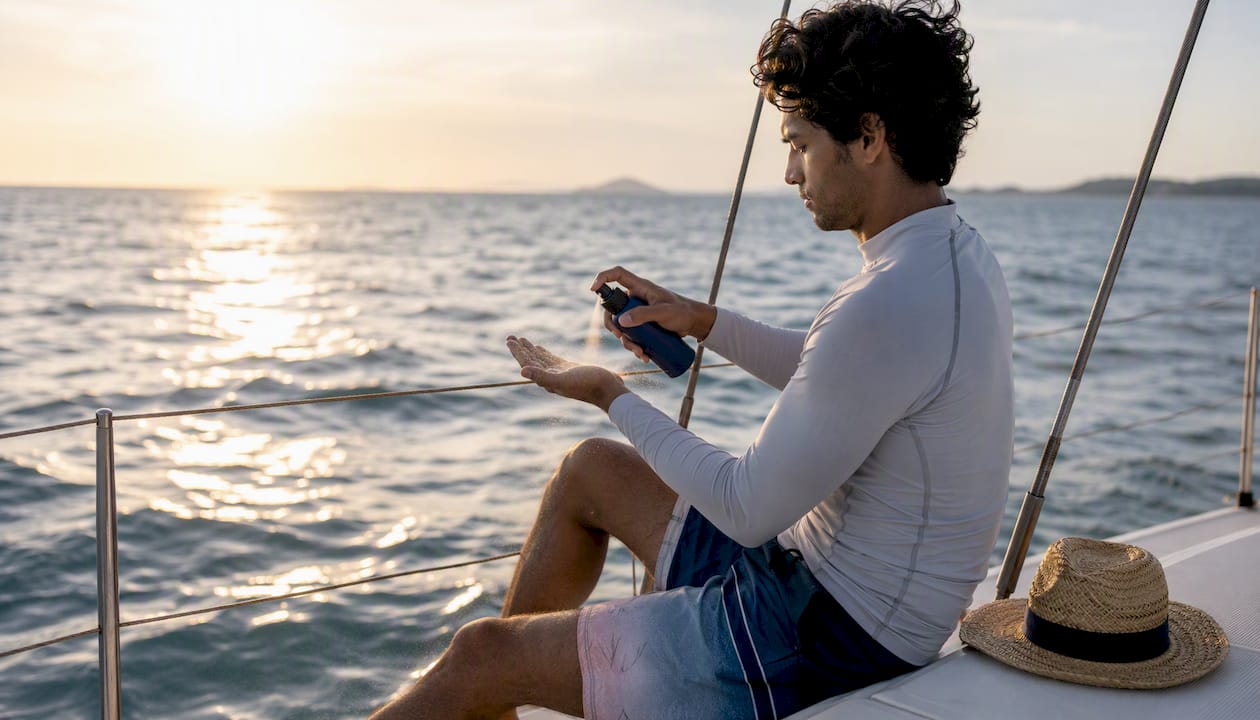
Safe spray use per the American Academy of Dermatology: spray until the skin glistens, then rub it in. Never spray directly at your face. Spray into your palm and apply by hand for the face, ears, and neck.
How to apply sunscreen correctly on a private boat tour
Getting application right before you board matters more than which product you pick.
Apply 15 minutes before sun exposure. Do this at your accommodation or in the parking area, not on the dock. Sunscreen needs time to bind to skin before it’s effective.
Use enough. For lotion, most adults need about one ounce (a full shot glass) for the whole body. For spray, apply until the skin glistens, then rub in.
Never skip rubbing in the spray. Spray product that sits as a mist without being rubbed in leaves uneven coverage. This is the single most common spray mistake.
For your face: use lotion or spray into your hands first, then apply. Avoid getting product near your eyes or mouth.
Reapply after every water exit and towel-dry. Don’t wait for the full 80-minute window if you’ve been actively snorkeling. Toweling removes a significant layer of protection.
Between snorkel sets: use the boat’s shaded stern area to reapply. A spray is faster here; just shield it from the wind by cupping your hand or turning away from the breeze.
Pro Tip: Spray into your palm first for any area near your face, beard, or hairline. It gives you control over where the product lands and keeps aerosol out of your lungs and eyes.
How UPF rash guards and sunscreen work together
A rash guard for snorkeling is not a substitute for sunscreen — it’s the primary layer that makes sunscreen more manageable. Here’s how to use both correctly.
Do:
Put on your UPF 50+ rash guard before leaving the dock. It covers your torso and arms without any reapplication needed.
Apply sunscreen only to exposed skin: face, hands, lower legs, feet, and the back of your neck.
Rinse your rash guard with fresh water after the tour to remove salt, sunscreen residue, and chlorine.
Don’t:
Apply heavy oil-based sunscreens directly under a tight rash guard. Oils in sunscreen can degrade elastane fabric over time, shortening the garment’s life.
Assume a rash guard with no UPF rating offers meaningful UV protection. Look for UPF 50+ specifically.
Skip sunscreen on your hands and feet just because you’re wearing a rash guard. Those areas burn fast on open water.
Which sunscreen formula works best for marine activities
Not all sunscreens perform equally in the water. For a Panama City Beach snorkel tour, look for these on the label:
SPF 30 or higher, broad-spectrum. Broad-spectrum covers both UVA and UVB. SPF 30 is the floor; SPF 50 is a reasonable choice for full-day exposure.
Water-resistant (40 or 80 minutes). This is a regulated label in the U.S. — it means the product was tested in water for that duration. Choose 80-minute formulas for snorkeling.
Mineral-based where possible. Zinc oxide and titanium dioxide are preferred by many dermatologists for water activities. They’re less likely to irritate skin and are considered safer for marine environments than many chemical filters. For a full comparison, Pcbprestige’s guide to zinc vs titanium sunscreen breaks down the differences.
Reef-safe labeling. Near sensitive shallows like those around Shell Island, choose formulas free of oxybenzone and octinoxate where available. Pcbprestige has a roundup of reef-safe sunscreen picks with dermatologist-backed options.
For children and anyone with sensitive skin, mineral lotion is the safest choice for the face and any area prone to irritation.
Safety and environmental notes for boaters
A few precautions that are easy to overlook on a busy boat day:
Never spray aerosol sunscreen near open flames. Some aerosol cans are flammable. Keep them away from the boat’s engine area and any fuel sources.
Avoid inhaling spray. Use aerosol sprays in open air, hold your breath briefly while spraying your torso, and never spray near other passengers.
Face application: spray into your hands, not directly at your head. This applies to children especially.
Minimize runoff near sensitive habitats. Avoid applying heavy amounts of sunscreen right before entering shallow reef or seagrass areas. If a rinse station is available at the launch point, use it.
What to pack for your Pcbprestige tour: pre-boarding checklist
Pcbprestige provides all snorkel gear, so your sun protection kit is the main thing to prepare. Store it in a small dry bag to keep it accessible on the boat.
UPF 50+ rash guard or long-sleeve swim shirt
SPF 30+ broad-spectrum lotion (mineral-based preferred for face)
Small spray sunscreen for quick body reapplication between sets (optional but useful)
Lip balm with SPF 15 or higher
Wide-brim hat for shore time at Shell Island
Reef-safe formula where available, especially near shallow snorkel areas
Apply your lotion 15 minutes before boarding. Bring the spray for top-ups on the water. Follow your captain’s guidance on when to enter the water and respect any instructions about staying clear of sensitive marine areas before rinsing off. For a broader look at what to expect on the water, the life jackets and boat safety guide from Pcbprestige covers additional preparation tips.
Key Takeaways
Lotion covers better; a UPF 50+ rash guard plus broad-spectrum, water-resistant sunscreen on exposed skin is the most dependable protection for a Panama City Beach snorkeling or dolphin-watching tour.
Point | Details |
Layer rash guard with sunscreen | UPF 50+ blocks ~98% UVA/UVB on covered skin; sunscreen handles the rest. |
Reapply after every water exit | Water-resistant formulas last 40–80 minutes; towel-drying removes protection sooner. |
Lotion beats spray for the face | Never spray sunscreen directly on the face; use lotion or spray into hands first. |
Rub in any spray you use | Aerosol mist left unrubbed leaves gaps; rubbing in is the AAD’s own guidance. |
Pcbprestige tour prep | Pack lotion for pre-boarding application and a spray for quick reapplication between snorkel sets on the boat. |
Sun safety on the water: a note from the Pcbprestige crew
Most sunburn stories from boat days share the same detail: people applied sunscreen once, got in the water, and didn’t reapply. The product wasn’t the problem. The timing was.
What gets overlooked is how quickly conditions change on open water. Reflection off the Gulf amplifies UV exposure compared to sitting on a beach under an umbrella. A 3-hour tour near Shell Island means sustained, reflected sun with wind and repeated water exposure. The guests who come prepared with a rash guard and a lotion they actually reapply leave the boat feeling good. The ones who rely on a single spray application before boarding often don’t.
Pcbprestige’s position on reef-safe sunscreens isn’t just environmental posturing. The waters around Shell Island and St. Andrews Bay support the marine life guests come to see. Choosing a mineral-based, reef-considerate formula is a small decision that adds up across hundreds of tours. It’s worth the extra two minutes of label-reading before you pack.
Ready to book your private tour in Panama City Beach?
Pcbprestige runs fully private dolphin watching and snorkeling tours out of Panama City Beach for families and small groups of up to 6 guests. Every charter includes a licensed local captain, all snorkel equipment, and a flexible itinerary built around your group — not a crowd.
You’ve done the prep work: you know what to pack, how to apply it, and when to reapply. The next step is getting on the water. Check availability and book your private tour directly — no middleman, no shared boat, just your group and the Gulf.
For guests planning ahead, Destin-area tourist best practices offer additional regional context on sun safety and water activity preparation along the Emerald Coast.
Useful sources
American Academy of Dermatology guidance on spray sunscreen — Harvard Health
Why rash guards outperform sunscreen alone for marine activities
How to choose a rash guard — UPF ratings explained
Spray vs. lotion sunscreen: effectiveness and dermatologist guidance
Mineral sunscreens and marine safety — CNET Health
Water-resistant sunscreen and reapplication timing for water sports
Rash guards vs. sunscreen — fabric care and layering
Do sunscreen sprays actually work? The science behind aerosol loss
Best reef-safe sunscreens — Pcbprestige dermatologist-backed picks
Zinc vs titanium sunscreen: mineral filter comparison — Pcbprestige
This article is general information, not medical or dermatological advice. Confirm current sunscreen recommendations with a qualified healthcare provider or the American Academy of Dermatology.
Recommended

Comments