Life Jackets on Boats: U.S. Safety and Legal Guide
Federal law requires every recreational vessel in the United States to carry at least one U.S. Coast Guard-approved life jacket for each person on board. That is not a recommendation. Boats 16 feet or longer must also carry a throwable Type IV device that is immediately accessible. The stakes behind these rules are stark: more than two-thirds of all boating deaths are drownings, and approximately 87% of those victims were not wearing a life jacket.
Safety fact: Approximately 87% of drowning victims in boating accidents were not wearing a life jacket at the time of the incident.
Key federal requirements at a glance:
One wearable, USCG-approved life jacket per person on board, every trip
Boats 16 feet or longer must carry a throwable Type IV device
Children under 13 must wear a properly fitted life jacket while the vessel is underway unless below deck or in an enclosed cabin
All life jackets must be in good, serviceable condition with a legible USCG approval label
Life jackets must be readily accessible, not buried in a storage compartment
What are the different types of life jackets for boating?
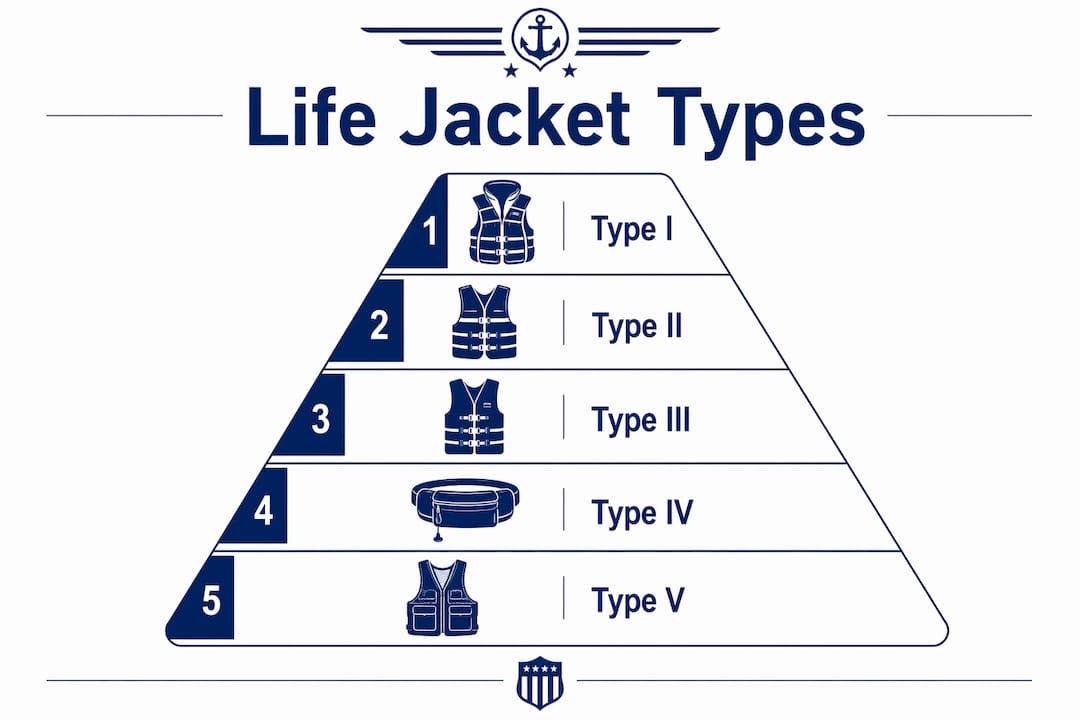
The U.S. Coast Guard classifies personal flotation devices (PFDs) into five types, each built for different conditions and activities. Choosing the right one depends on where you boat, how far from shore you travel, and what you plan to do on the water.
Type I: Offshore life jacket
Type I jackets offer high buoyancy and are designed for open, rough, or remote water where rescue may take time. Their defining feature is the ability to turn most unconscious wearers face-up, which can be the difference between survival and drowning when you cannot help yourself. They are bulkier than other types, but that bulk is deliberate.
Type II: Near-shore buoyant vest
Type II vests work well in calm inland water where rescue is likely to arrive quickly. They may turn some unconscious wearers face-up, but less reliably than Type I. A good choice for day trips on lakes or protected bays, but not for offshore use.
Type III: Flotation aid
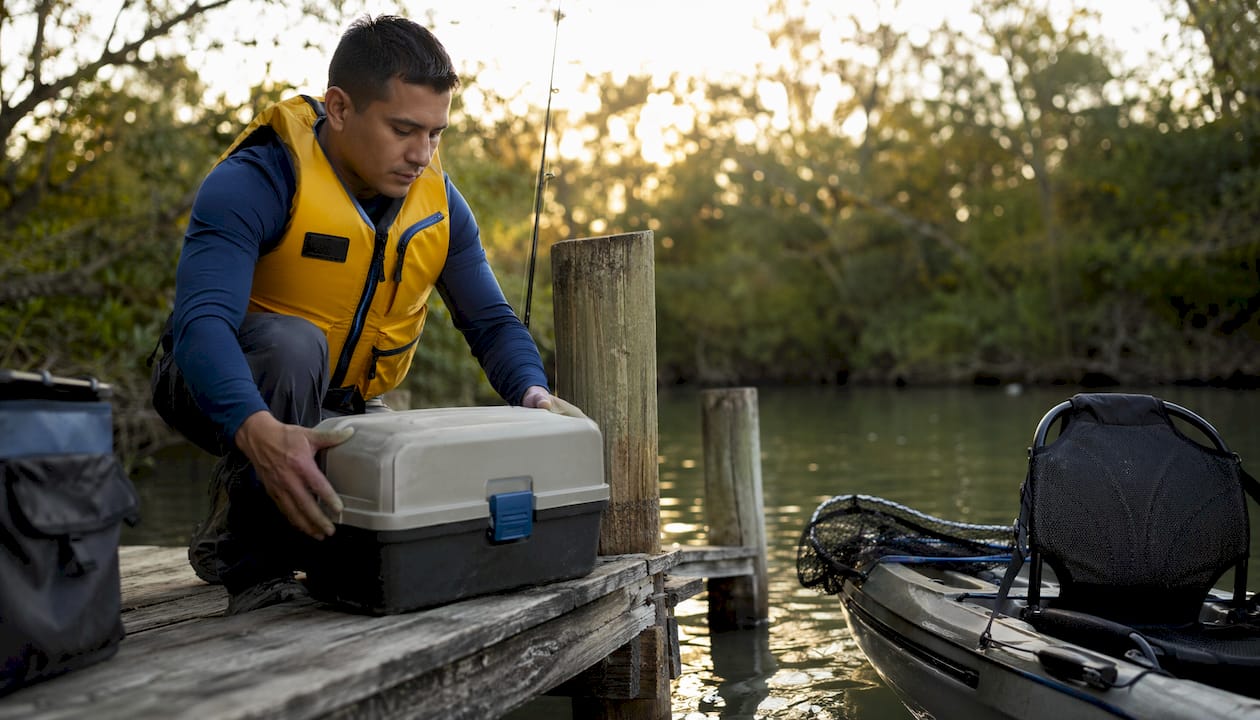
Type III covers the widest range of recreational activities, from kayaking and fishing to general boating and water sports. These are the most comfortable for extended wear, which matters because a life jacket only protects you when you actually have it on. They will not turn an unconscious wearer face-up on their own.
Type IV: Throwable device
Type IV devices, including ring buoys and seat cushions, are not worn. They are thrown to a conscious person in the water. Vessels 16 feet or longer must carry one that is immediately accessible. Some cushion-style Type IVs double as seat cushions, though they must still meet USCG approval standards.
Type V: Special-use devices
Type V covers a broad category of specialty PFDs, including inflatable life jackets, hybrid inflatables, and activity-specific designs like whitewater paddling jackets. Inflatable life jackets are popular because they are slim and comfortable, resembling a pair of suspenders or a belt pack. They inflate automatically on water immersion or manually via a pull cord. The catch: they require regular maintenance, are not approved for children under 16, and cannot be used for towing sports or PWC operation.
Pro Tip: If you are shopping for inflatable life vests for boats, check that the CO2 cartridge is the correct size for your jacket, inspect it for corrosion before each season, and carry a spare rearming kit. An uninflated inflatable is just a fashion accessory.
What are the legal requirements for life jackets on U.S. boats?
The federal carriage rule is straightforward: one USCG-approved wearable life jacket per person, on board at all times, in serviceable condition. But carriage and wear are two different legal obligations, and confusing them gets boaters into trouble.
Carriage means the life jacket must be on the boat. Wear means it must be on your body. Federal law mandates wear only for children under 13 while underway, unless they are below deck or in an enclosed cabin. Adults are not federally required to wear one, though the Coast Guard strongly recommends it at all times.
State laws frequently go further. Some states lower the mandatory wear age for children, require wear in specific conditions like rough weather or at night, or mandate it for PWC operators and passengers. Checking your state’s boating authority before you launch is not optional if you want to stay compliant.
Legal compliance checklist:
One wearable USCG-approved PFD per person, accessible at all times
Throwable Type IV device on boats 16 feet or longer, immediately reachable
Children under 13 must wear a life jacket while underway (federal minimum; state rules may be stricter)
Life jackets must be USCG-approved with a legible label and in good condition
Inflatable PFDs are not permitted on PWCs or while being towed
Pro Tip: State boating laws change. Before a trip to an unfamiliar waterway, spend five minutes on your state’s boating authority website. A $15 fine for a missing throwable device is the least of your worries if something goes wrong.
How to get the right fit and actually wear your life jacket
The best life jacket is the one you wear. Boating safety experts consistently point to comfort and fit as the primary reasons people leave their PFDs stowed rather than worn, and that choice accounts for the drowning statistics cited above.
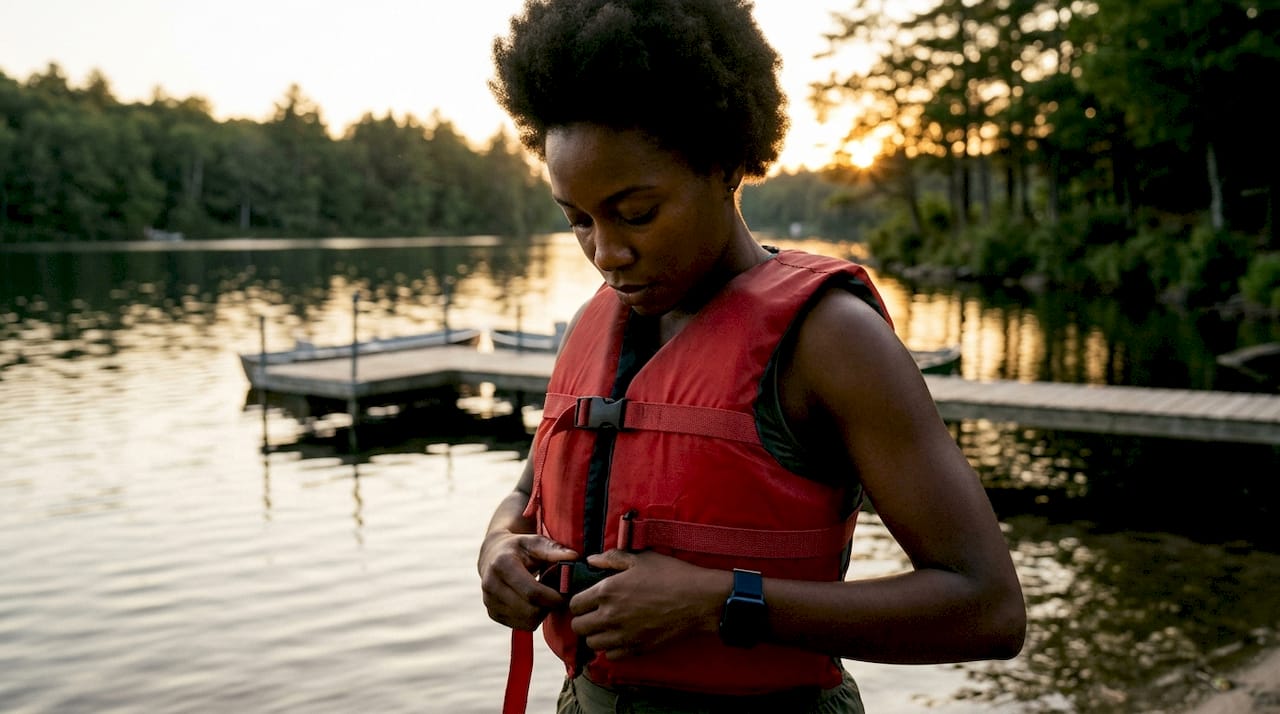
Fit starts with the lift test: put the jacket on, fasten all buckles and zippers, raise your arms straight overhead, and have someone grasp the tops of the arm openings and gently pull upward. If the jacket rides up past your chin or face, it is too large. If it cannot keep your body afloat at the correct position, it is too small. A properly fitted jacket stays put.
Children’s life jackets are sized by weight, not age. An adult jacket will not work for a child, full stop. Always check the manufacturer’s weight range on the label before purchasing one for a younger passenger.
Practical fit and storage tips:
Check the manufacturer’s label for the correct weight and chest size range
Fasten all straps, buckles, and zippers before testing fit
Store life jackets where they are visible and reachable, not buried under gear
Inspect foam-filled jackets annually for waterlogged or compressed foam
Dry life jackets completely after each use and store them in a dry location
Replace any jacket with torn fabric, broken buckles, or a faded USCG label
Pro Tip: Modern low-profile and inflatable designs have changed the conversation around comfort. If your passengers resist wearing their PFDs, let them try an inflatable style. The slim fit and light weight tend to eliminate most objections before you leave the dock.
PFDs degrade over time due to hidden damage like waterlogged foam or faded fabric, making annual inspection critical for both safety and legal compliance.
Frequently asked questions about life jackets on boats
How many life jackets are required on a boat? Federal law requires one wearable USCG-approved life jacket for every person on board. Boats 16 feet or longer must also carry one throwable Type IV device that is immediately accessible.
What is the 1/3 rule in boating? The 1/3 rule is a fuel management guideline: use one-third of your fuel going out, one-third returning, and keep one-third in reserve for emergencies. It is a seamanship principle, not a life jacket regulation, but it reflects the broader safety mindset that applies to all boat safety gear decisions.
Which life jackets are approved for boating? Only life jackets bearing a USCG approval number on the label meet federal carriage requirements. The label must be legible and the jacket must be in serviceable condition. Buoyancy aids, snorkel vests, and other flotation products without that approval number do not count.
Do you have to wear a life jacket while on a boat? Federally, adults are not required to wear one, only to have one accessible. Children under 13 must wear a USCG-approved jacket while underway unless below deck or in an enclosed cabin. Many states impose stricter wear requirements, so local rules always apply.
Why snorkel vests are not substitutes for life jackets
A snorkel vest and a USCG-approved life jacket look similar enough to cause real confusion, and that confusion can be dangerous. Snorkel vests provide buoyancy for face-down swimming in calm water, but they do not meet federal carriage requirements and cannot replace a life jacket on a boat.
The functional difference is critical. Snorkel vests are designed for buoyancy control while swimming face-down. They do not keep an unconscious person’s airway above water. A USCG-approved life jacket, particularly Type I and Type II designs, is engineered to turn and hold an unconscious wearer face-up. That single feature is what makes a life jacket a lifesaving device rather than a swimming aid.
Why snorkel vests fall short as PFD replacements:
They lack the buoyancy rating required by federal law
They do not turn an unconscious wearer face-up
They carry no USCG approval number
They are not designed for the impact forces or conditions of open-water boating
They provide no protection in rough water or during unexpected immersion
If you are planning a snorkeling excursion from a boat, the snorkel vest stays in the water. A USCG-approved life jacket stays on the boat, one per person, accessible at all times.
Key Takeaways
Every recreational boater in the U.S. must carry a USCG-approved life jacket for each person on board, and approximately 87% of drowning victims in boating accidents were not wearing one.
Point | Details |
Federal carriage rule | One USCG-approved wearable life jacket per person on board is required by federal law at all times. |
Throwable device requirement | Boats 16 feet or longer must carry an immediately accessible Type IV throwable device. |
Children under 13 | Must wear a properly fitted USCG-approved life jacket while underway unless below deck or in an enclosed cabin. |
Fit and annual inspection | Use the lift test to confirm fit; inspect foam jackets annually for waterlogged or degraded material. |
Snorkel vests are not PFDs | Snorkel vests lack USCG approval and cannot turn an unconscious wearer face-up, making them unsuitable replacements. |
Experience life jacket safety firsthand with Pcbprestige

Safety is not an afterthought on a Pcbprestige tour. Every guest aboard a private dolphin and snorkeling tour in Panama City Beach is equipped with properly fitted, USCG-approved life jackets before leaving the dock. The licensed captain handles all safety protocols so you can focus on the dolphins, the clear Gulf water, and Shell Island’s marine life. Ready to get on the water the right way? Book your private tour and see what a safety-first experience actually feels like.
Recommended
Comments