Jellyfish Sting Treatment: A Guide for PCB Tourists

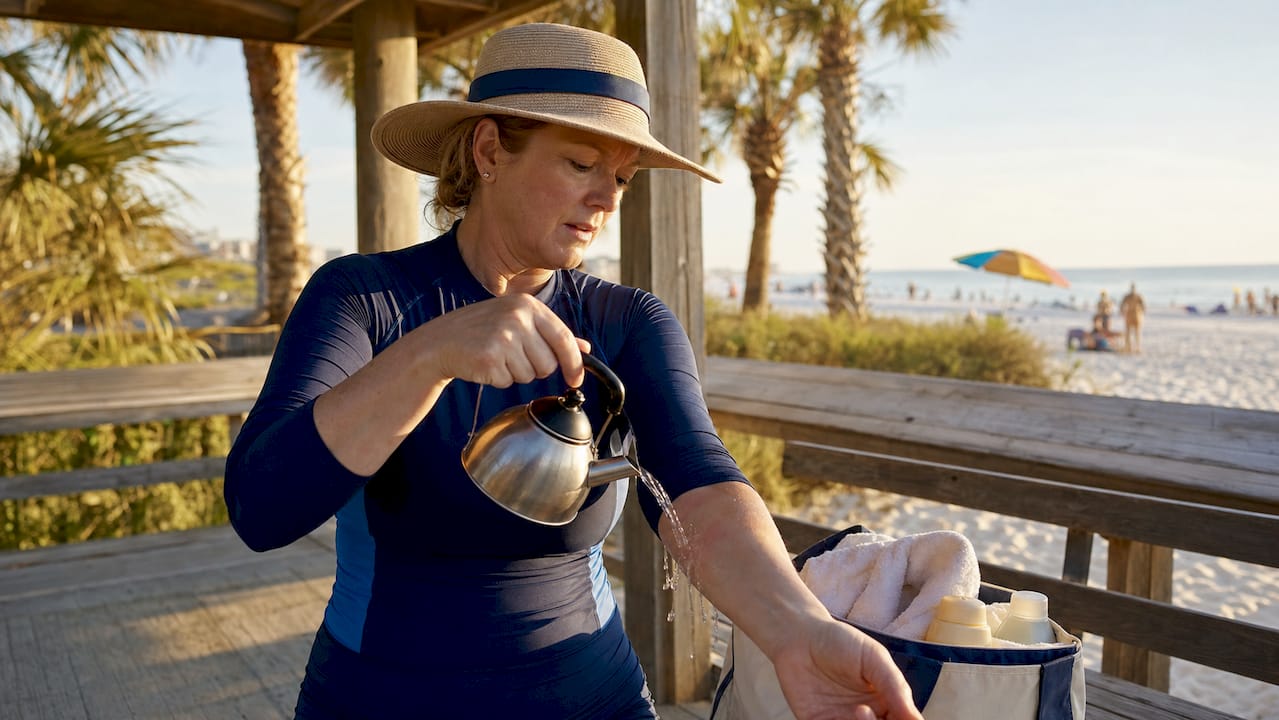
What to do for jellyfish stings right away
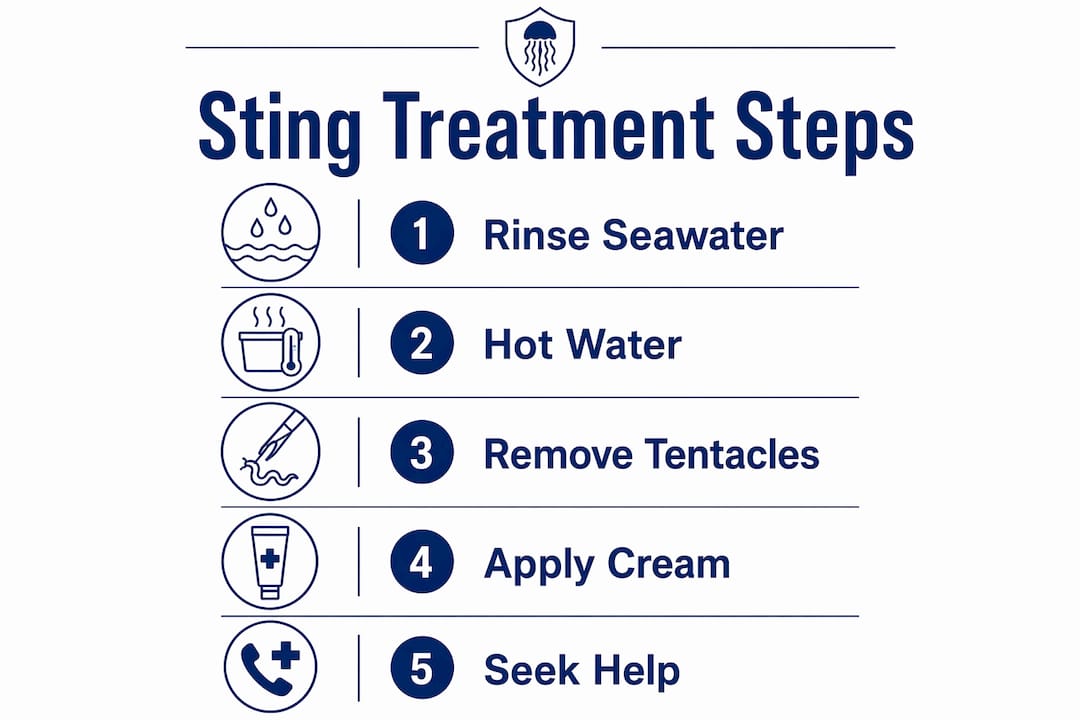
The moment a sting happens, your first move determines how bad it gets. Get out of the water immediately, stay calm, and follow these steps in order.
Rinse with seawater only. Freshwater triggers osmotic changes that cause unfired nematocysts to discharge, releasing more venom into the skin.
Remove visible tentacles carefully. Use tweezers or double-gloved fingers. Never use bare hands.
Do not rub the area. Rubbing spreads venom and fires additional stinging cells.
Keep the victim still and out of the water to prevent secondary stings.
Do not apply pressure or cover the wound tightly.
Most jellyfish stings are self-limiting pain events. Simple, fast action with seawater and careful tentacle removal handles the majority of cases without any further treatment needed.
Table of Contents
Effective pain relief after a sting
Heat is the most effective tool for easing jellyfish sting pain. Soak the affected skin in hot water at 110°F to 113°F for 20 to 45 minutes. A hot shower works if soaking is not practical. The water should feel hot but not scalding.
Hot water immersion at 110°F–113°F for 20–45 minutes is the primary recommendation.
Hot towels or a hot shower are solid alternatives when a basin is not available.
Cold packs offer some comfort but are generally secondary to heat.
Hydrocortisone cream (0.5%–1%) applied twice daily helps with lingering itch and swelling.
Oral antihistamines can reduce allergic skin reactions after the initial sting is treated.
Pro Tip: If you’re on a boat and have no thermometer, run the hottest tap water that doesn’t burn your wrist. That’s close enough to the target range to help.
Signs you need emergency care immediately
Some stings go beyond pain. Seek emergency care right away if you or someone with you shows any of these symptoms.
Difficulty breathing or shortness of breath
Chest pain
Severe swelling beyond the sting site
Vomiting or nausea that won’t stop
Lightheadedness, confusion, or loss of consciousness
Seizures
Call 911. Do not attempt to drive yourself to the hospital if you feel these symptoms coming on. Box jellyfish stings, while rare in the Gulf of Mexico, can require antivenom and intensive care. When in doubt, treat any severe systemic reaction as a medical emergency.
Myths and harmful treatments to skip
A lot of popular jellyfish sting advice is wrong, and some of it actively makes things worse.
Do not rinse with freshwater. It causes nematocysts to fire and worsens the injury.
Do not urinate on the sting. No scientific evidence supports this remedy, and urine can aggravate the wound.
Avoid meat tenderizer, alcohol, and ammonia. These are unproven or harmful and not recommended.
Do not scrape the sting area with a card or shell. Scraping fires more nematocysts.
Pressure bandages are not appropriate for jellyfish stings.
Vinegar is not a universal fix. For Portuguese man-of-war stings, vinegar can worsen venom discharge. Species identification matters, and tourists usually cannot make that call reliably.
Stick to seawater, heat, and over-the-counter creams. Anything more exotic than that requires knowing exactly which species stung you.
Jellyfish in Panama City Beach: what local guides know
The Gulf waters around Panama City Beach are home to several jellyfish species, and the marine life here ranges from moon jellies to cannonball jellyfish, both of which produce mild to moderate stings. Portuguese man-of-war sightings occur occasionally, particularly after offshore winds push them toward shore.
Moon jellyfish cause mild stings, often just a brief burning sensation.
Cannonball jellyfish are common and generally produce only minor irritation.
Portuguese man-of-war are less frequent but pack a stronger sting; vinegar should be avoided for these.
Avoid touching any jellyfish, even beached ones. Dead jellyfish can still sting.
Pcbprestige captains brief guests on current water conditions and local marine hazards before every tour, integrating marine biology knowledge into the experience.
For broader context on staying safe in nearby Gulf waters, the Destin water safety guide covers regional risks worth reviewing before any beach trip.
How to identify sting severity and type
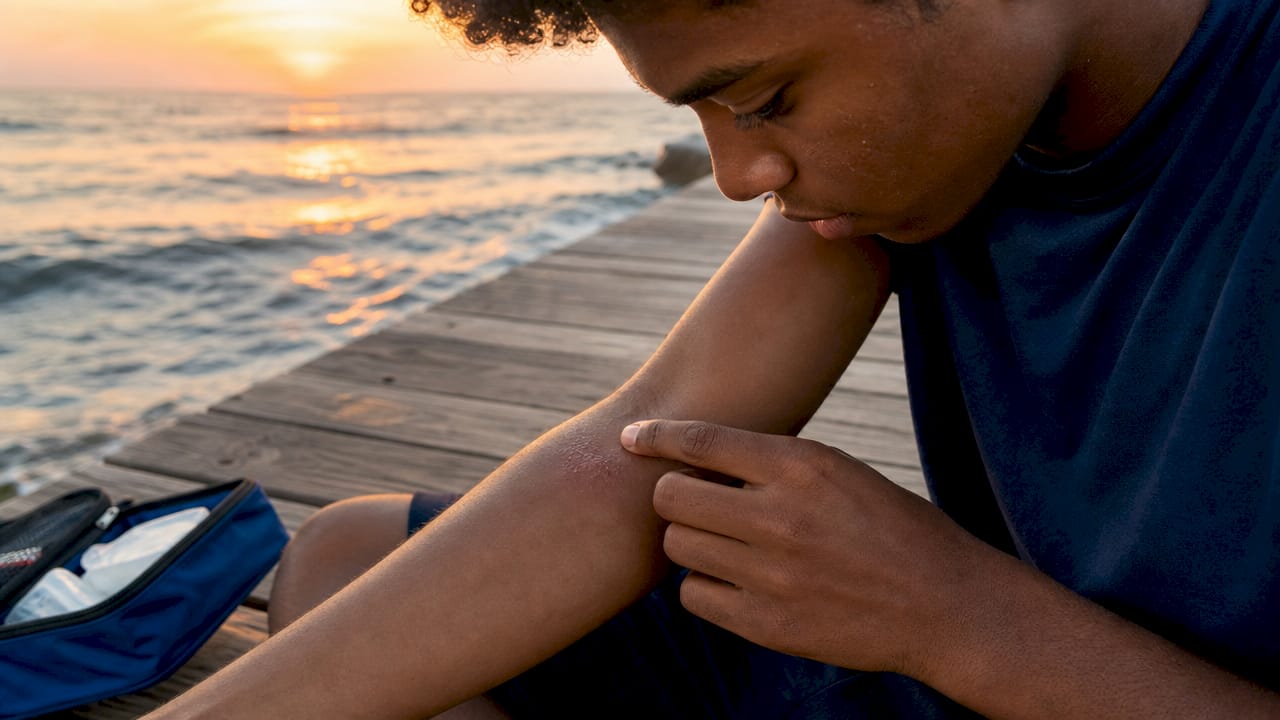
Mild stings produce localized redness, a burning sensation, and a raised welt at the contact site. Moderate stings may cause blistering, muscle cramps, or swelling that spreads slightly beyond the sting area. Severe stings trigger systemic symptoms: breathing trouble, chest tightness, or altered consciousness.
The species involved shapes the severity. Box jellyfish produce the most dangerous stings globally, though the species found in the Gulf are generally less lethal than those in Australian waters. Without a clear look at the animal, assume a moderate sting and treat with seawater and heat until symptoms clarify.
What to rinse a jellyfish sting with
Seawater is the safest universal rinse for North American jellyfish stings because it avoids the osmotic shock that freshwater causes. For tropical jellyfish or confirmed box jellyfish stings, a vinegar rinse followed by seawater is appropriate. For Portuguese man-of-war stings, skip vinegar entirely and use saltwater only.
Aftercare steps to prevent infection and promote healing
Once the initial sting is treated, the skin still needs attention over the following days. Clean any open blisters or broken skin three times daily and apply an antibiotic ointment. Bandage only if the wound is open and exposed to dirt. Apply a topical anti-inflammatory cream like hydrocortisone if itching persists. Most stings resolve within hours, but skin irritation can linger for weeks. Contact a healthcare provider if the rash spreads, becomes infected, or does not improve within a few days.
Key Takeaways
Seawater rinsing and hot water immersion are the two most effective, evidence-backed steps for jellyfish sting treatment in Panama City Beach.
Point | Details |
Rinse with seawater only | Freshwater triggers nematocyst discharge and worsens the sting. |
Heat beats cold for pain | Soak in 110°F–113°F water for 20–45 minutes to reduce pain effectively. |
Skip urine and vinegar (usually) | Neither is universally safe; vinegar worsens Portuguese man-of-war stings. |
Know the emergency signs | Breathing difficulty, chest pain, or loss of consciousness requires a 911 call. |
Aftercare prevents infection | Clean open wounds daily and apply antibiotic ointment until fully healed. |
Planning a snorkeling or dolphin watching trip in Panama City Beach? Pcbprestige runs fully private tours aboard a 26-foot powerboat, captained by a licensed local expert who briefs every group on water safety before departure. Book your private tour and explore Shell Island with confidence.

Recommended
Stingrays of St. Andrews Bay: A Complete Guide | PCB Prestige Private Dolphin & Snorkel
Sea Stars in Panama City Beach: The Complete Guide | PCB Prestige Private Dolphin & Snorkel Tours
Plan Your Adventure with Our Intake form | PCB Prestige Private Dolphin & Snorkel Tours
Marine Life in St. Andrews Bay: What You Might See on Your Tour
Comments