
Private Stingray & Marine Life Tours in St. Andrews Bay
Experience an intimate encounter with the ocean’s most graceful residents. Our expert-led private charters guide your family through the pristine emerald waters of Panama City Beach for an ethical and unforgettable marine adventure.
Guardians of the Emerald Coast


Prime Habitats of St. Andrews Bay
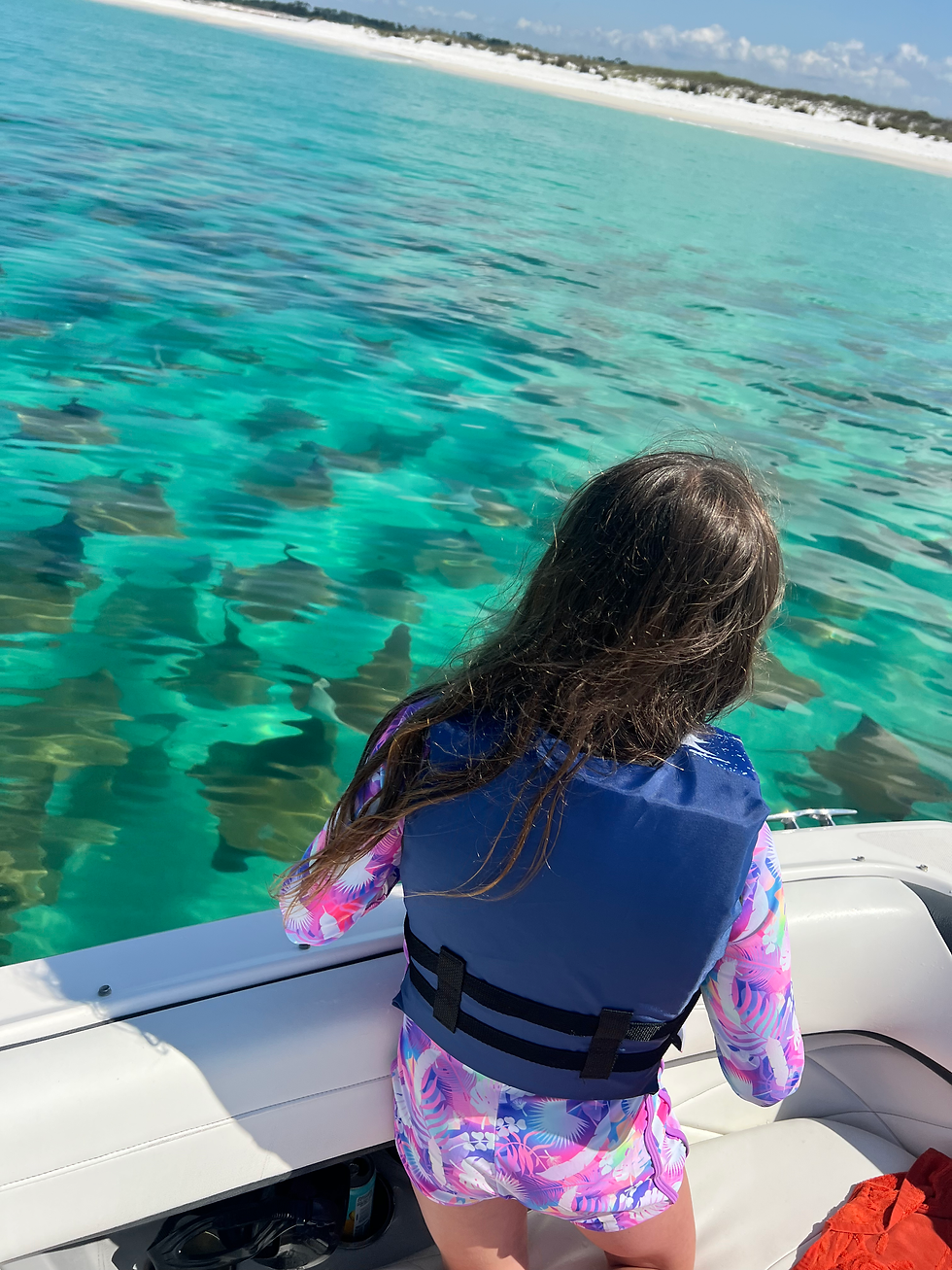
Stingrays thrive in the calm, shallow waters of St. Andrews Bay, particularly around the sandy flats and seagrass beds of Shell Island. These environments provide the perfect temperature and protection for rays of all sizes. They frequent areas where the Gulf of Mexico meets the bay, utilizing the nutrient-rich currents to find optimal resting spots in the soft sediment.

Resting & Feeding Behaviors
Known for their 'shuffling' move, stingrays spend much of their day partially buried in the sand to stay cool and hidden from predators. During feeding times, they become active foragers, using their electro-sensors to detect crustaceans and mollusks hidden beneath the seabed. Watching them glide through the bay is a testament to their graceful, bird-like swimming patterns.
Characteristics & Identification Guide

Southern Stingray
The Southern Stingray is identified by its distinct diamond-shaped body and dark coloration, perfectly camouflaged against the sandy bottom. Markings include an angled snout and tiny white spots on the head.

Atlantic Stingray
The Atlantic Stingray features rounded wing tips and a tan coloration. They are smaller than their Southern cousins and thrive in the shallow, brackish margins of St. Andrews Bay.
Cownose Ray
The Cownose Ray is famous for its unique double-lobed snout. Often swimming near the surface, they display deep brown or golden backs and high-domed heads.
Respectful Interaction


Safe Distance
Quiet Presence
No Disturbance

Conservation Status & Threats
- Habitat Loss: Coastal development and seagrass degradation reduce critical feeding and nursery grounds.
- Water Quality: Pollution from runoff can lead to decreased oxygen levels and health issues for marine life.
- Entanglement: Discarded fishing lines and marine debris pose a constant physical threat to rays.
Protecting these species starts with awareness. At PCB Prestige, we emphasize ethical encounters that respect the natural behavior and habitat of every animal we visit.
Stingray FAQ: Your Questions Answered
Are stingrays dangerous to swimmers?
Stingrays are generally docile and only use their barbs in self-defense. By using the 'stingray shuffle' (sliding your feet along the sandy bottom), you alert them to your presence so they can swim away safely.
What kind of stingrays live in St. Andrews Bay?
The most common species are Atlantic Stingrays and Southern Stingrays. You might also spot Cownose Rays swimming in large groups (known as fevers) near the surface.
Can I touch a stingray on the tour?
We encourage viewing these beautiful creatures from a respectful distance. While they are often curious, we follow ethical wildlife viewing practices to ensure the safety of both our guests and the marine life.
When is the best time to see stingrays?
Stingrays are present year-round, but water clarity is best during our morning tours. During the warmer spring and summer months, you'll often see them in the shallows near Shell Island.


