Dolphins at Night: Private Sunset Tour Planning in Panama City Beach

Updated: 4 days ago
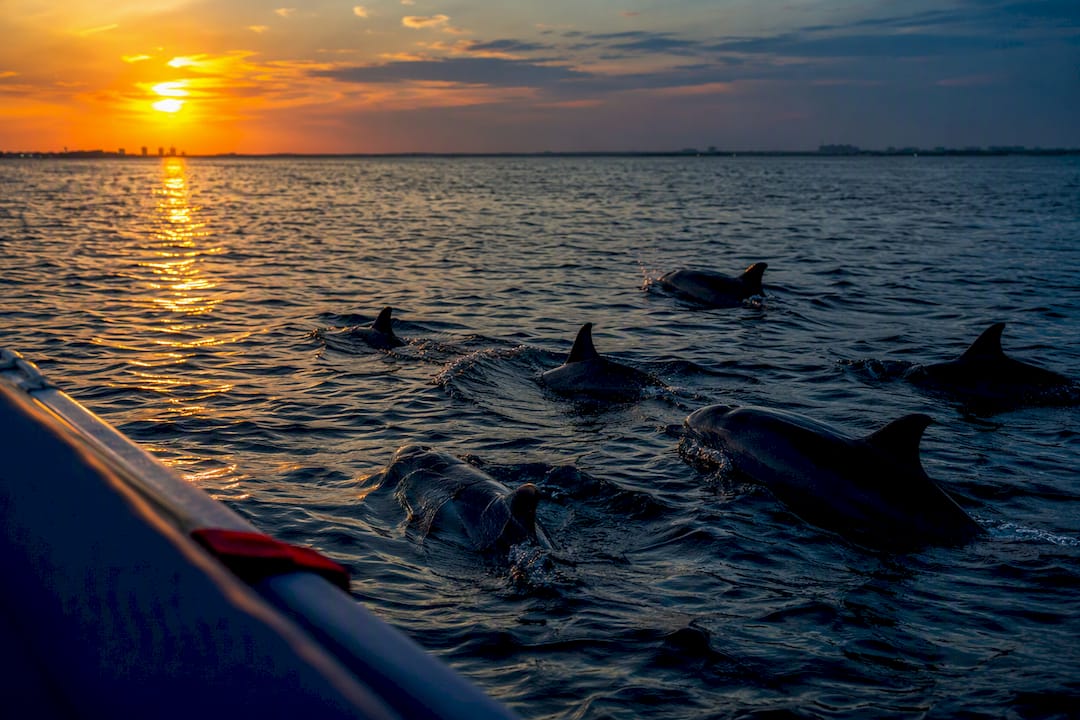
Dolphins are commonly visible on sunset and evening boat tours, especially in the 60 to 90 minutes before dusk, but sightings fade fast once true darkness sets in. Golden hour timing, incoming tides, and a captain who reads the water give you the best shot. Nothing about wildlife is guaranteed, but dusk consistently outperforms a random midday cruise.
TL;DR:
Most dolphin activity occurs during the hour before sunset, with feeding behaviors, bow-riding, and surface travel peaking under low light conditions.
Longer private tours offer a better chance of encountering dolphins actively feeding, especially if the captain adapts routes based on real-time sightings and bird activity.
Sightings are more likely when water is calm, tides concentrate bait, and bird activity signals nearby dolphin pods, all most apparent during golden hour.
Proper planning includes timing departures around seasonal light changes and confirming that wildlife sightings are never guaranteed despite the better odds.
Bringing layers, motion sickness remedies, a camera for low light, and asking about boarding logistics enhances safety and comfort for evening dolphin cruises.
Table of Contents
Is It Common to See Dolphins at Night on Sunset Tours?
Short answer: yes, if “night” means the dusk window right around sunset, not pitch dark at 10 PM. That distinction matters because it changes what you should actually book.
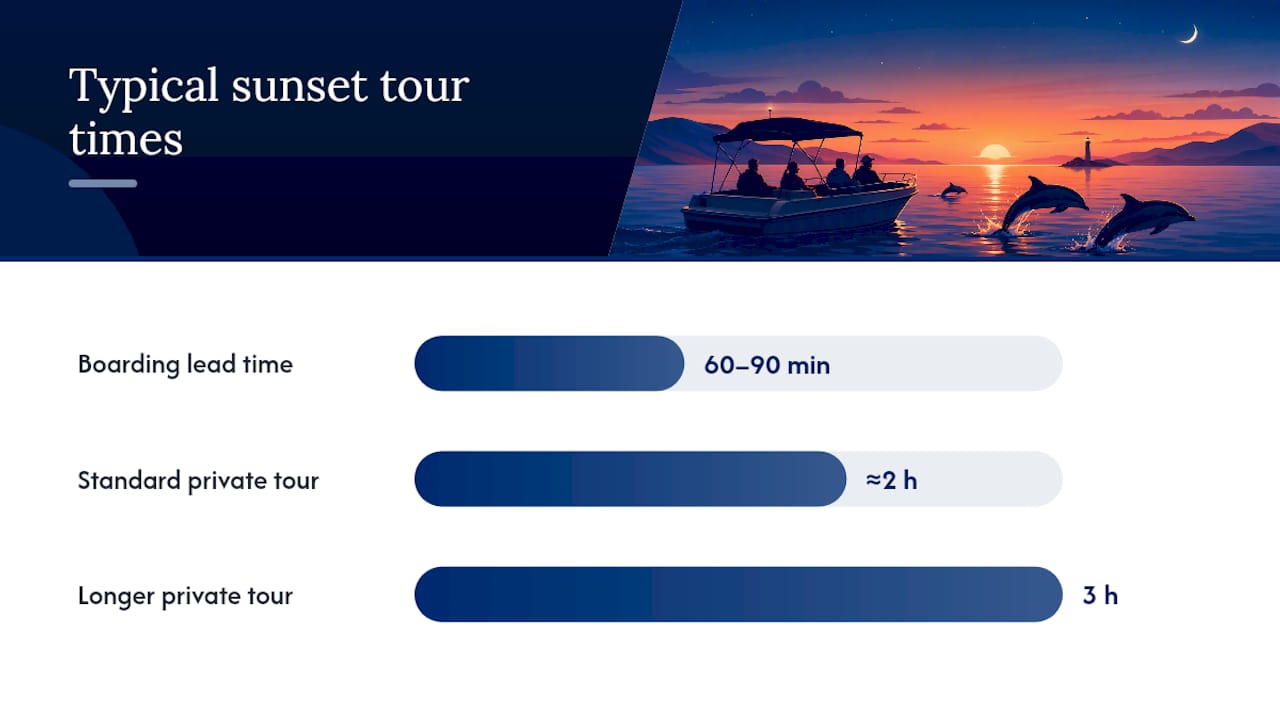
Most private sunset tours run about two hours, with boarding roughly 60 to 90 minutes before sunset so the boat reaches productive water while there’s still usable light. A longer three-hour private tour gives a captain more room to chase a feeding pod once it’s spotted. Dusk cruises frequently produce dolphin sightings because that window overlaps with when dolphins are actively feeding, not resting.
What you’ll typically see:
Coordinated feeding and herding behavior near bait schools
Bow-riding, where dolphins surf the wake right at the front of the boat
Surface travel in loose pods, often moving parallel to the shoreline
Dorsal fin silhouettes cutting through orange or pink water as the sun drops
Captains often slow the boat or hold position near active pods rather than motoring closer, since a stationary boat lets dolphins approach on their own terms. As light fades, detail below the surface disappears first, while the silhouette of a fin against the sky often gets sharper and more photogenic.
Statistic to know: operators built around sunset departures consistently report strong sighting rates paired with better light for photos than comparable midday trips, which is exactly why so many private charters default to that window.
Why Are Dolphins Often Active Right at Dusk?
Dolphins aren’t randomly scattered across the Gulf. They follow food, and food follows light and current.
Feeding windows align with low light. Dawn and dusk are prime hunting times, when baitfish rise closer to the surface and visibility conditions favor the predator, not the prey.
Incoming tides concentrate bait. Currents push through passes and channels, funneling baitfish into predictable choke points, and dolphins know exactly where those choke points sit.
Calm water helps everyone see everything. Flat seas near sunset make it easier to spot fins, wakes, and diving birds, which is part of why locals plan trips around early morning and late afternoon windows rather than the middle of the day.
Season and weather stretch or shrink this window. Summer evenings hold usable light later, so a sunset departure might start closer to 7:30 or 8 PM. Winter trips shift earlier, sometimes departing by 4:30 or 5 PM to catch the same golden light before an earlier sunset. A front moving through or unusually murky water after heavy rain can shrink the productive window on either end.
How Do Captains Find Dolphins After Dark?
Finding dolphins in fading light isn’t guesswork. Its pattern recognition built over years on the same water.
Birds give away the location first. Diving pelicans and terns concentrated over one spot almost always mean baitfish are being pushed to the surface, and dolphins are rarely far behind.
Local knowledge of channels and passes narrows the search. A captain who knows which sandbar edges and pass mouths concentrate bait on an incoming tide doesn’t waste time searching open water.
Wake-riding invites closer encounters. Slowing down near a pod, rather than gunning toward it, often draws curious dolphins to the bow on their own.
Private charters can adjust routes in real time. Because there’s no fixed group itinerary to stick to, a captain running a private boat can radio other boats and follow scouting reports to chase active pods instead of a preset route.
Pro Tip: Polarized sunglasses aren’t just for comfort. They cut surface glare enough to spot a fin or a shadow moving under the water seconds before your captain does, which means you often see the dolphins first.
Licensed local captains also adapt safety practices as light drops. That means running proper navigation lights earlier, keeping a tighter eye on other vessel traffic near channel markers, and timing the return leg so docking happens with enough daylight or dock lighting to board safely.
What Should You Bring on an Evening Dolphin Tour?
Preparation makes the difference between a comfortable evening and a shivering one. Here’s what to pack:
Layers, even in warm months. Temperatures drop fast once the sun is gone, and open water always feels colder than the dock.
Non-slip shoes and a light windbreaker. Boat decks get damp with spray, and evening breezes pick up as the air cools.
A camera set for low light. Use a faster shutter speed to freeze a breaching dolphin against the sunset, and brace your phone or camera against the rail to cut motion blur.
Motion-sickness remedies if you’re prone to it. Take them before boarding, not after you start feeling queasy.
A quick question for the crew about life jackets and gear storage, especially if you’re traveling with kids or anyone who needs help boarding.
Pro Tip: If you’re traveling with young children or anyone with mobility needs, ask about boarding logistics and return timing before you book, not after. A 3-hour private tour that returns near full dark needs a different plan than a 2-hour sunset run that’s back at the dock while there’s still light.
What Should You Know Before Booking a Sunset Tour?
Booking a private tour comes down to matching your schedule to the season and asking the right questions upfront.
Boarding times shift with sunset, so a summer evening tour might board around 6:30 or 7 PM, while a winter tour boards closer to 3:30 or 4 PM to catch the same light.
Confirm what’s included before you pay. A licensed captain, a private boat, and basic safety gear are standard, but amenities like onboard bathrooms vary by operator.
Sightings are never promised. Responsible operators are upfront that wildlife encounters can’t be guaranteed, and a trip without dolphins still delivers a genuine sunset on the water.
Ask specific questions when you call: what time do we board, what time do we typically return, what’s on the boat, and who’s driving.
For a deeper look at timing across the calendar, Dolphin Watching Season: Best Times and Top Tips breaks down month-by-month patterns, and captains applying nearshore tide and wind planning use very similar logic when deciding whether an evening run is worth the trip.
Why Private Sunset Tours Change the Odds
The biggest factor in a good evening encounter isn’t luck. It’s whether the person driving the boat can actually read the water in front of them.
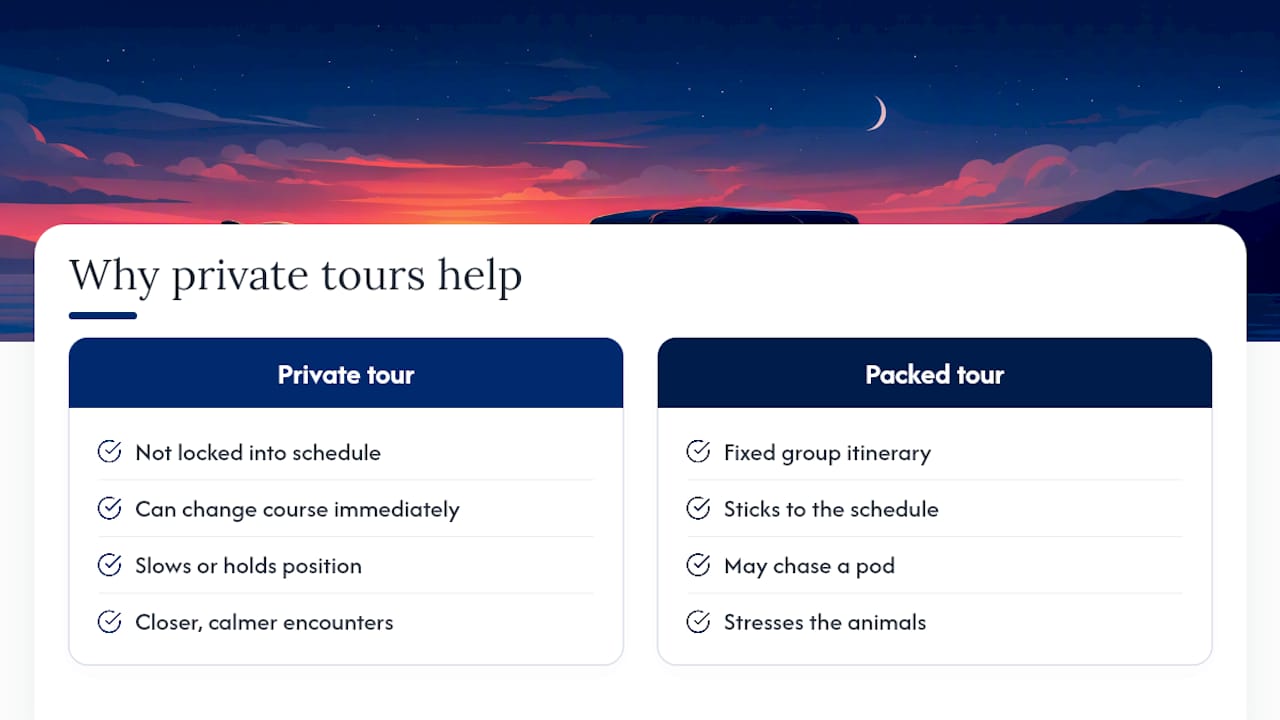
A private charter isn’t locked into a fixed group itinerary, so a captain who spots diving birds or a moving pod can change course immediately instead of sticking to a schedule built for a boat full of strangers with different priorities. That flexibility is the whole point of running small, private groups rather than a packed group tour. Ethical viewing matters here too: a captain who slows down and holds position rather than chasing a pod gets closer, calmer encounters without stressing the animals, and that patience tends to produce the better photos and the better memory. Anyone who has spent real time on this water learns the same lesson eventually: the dolphins reward the boats that wait for them, not the ones that race after them.
— Justin
Ready to Book Your Own Sunset Encounter?
Some local operators offer fully private boat tour options on this stretch of the Gulf, which means no strangers sharing your boat and no fixed script your captain has to follow if a pod shows up somewhere unexpected.

PCB Prestige offers one private 3-hour tour for up to six guests at $450 plus tax per group. Choose dolphin watching, Shell Island beach time and shell hunting, snorkeling when conditions and water clarity allow, or a combination with Captain Justin. The final departure of the day is the sunset option; confirm seasonal timing before booking.
Check available dates and book your private 3-hour tour online. For the final sunset departure, confirm seasonal timing with Captain Justin.
Sources
FAQ
Can You Actually See Dolphins After the Sun Sets?
You can often see dolphins in the dusk window right around sunset, but visibility drops sharply once it’s fully dark, so most operators time tours for the golden hour rather than true nightfall.
What Time Should a Sunset Dolphin Tour Depart?
Most sunset tours board about one hour before sunset, with timing shifting earlier in winter and later in summer to match the changing daylight.
Are Dolphin Sightings Guaranteed on a Private Tour?
No responsible operator guarantees wildlife sightings, though sunset timing and an experienced captain meaningfully improve your odds compared to a random midday trip.
How Much Does a Private Sunset Tour with Pcbprestige Cost?
The private 3-hour tour costs $450 plus tax per group of up to six guests. The sunset departure is the final trip of the day within the same tour offering. Check availability on the booking page.
What Should I Wear on an Evening Boat Tour?
Dress in layers with a light windbreaker and non-slip shoes, since temperatures drop quickly on the water once the sun goes down.
Recommended
Comments