Florida Beach Flag Meanings: Your Safety Guide
- PCB Prestige

- Aug 10
- 4 min read
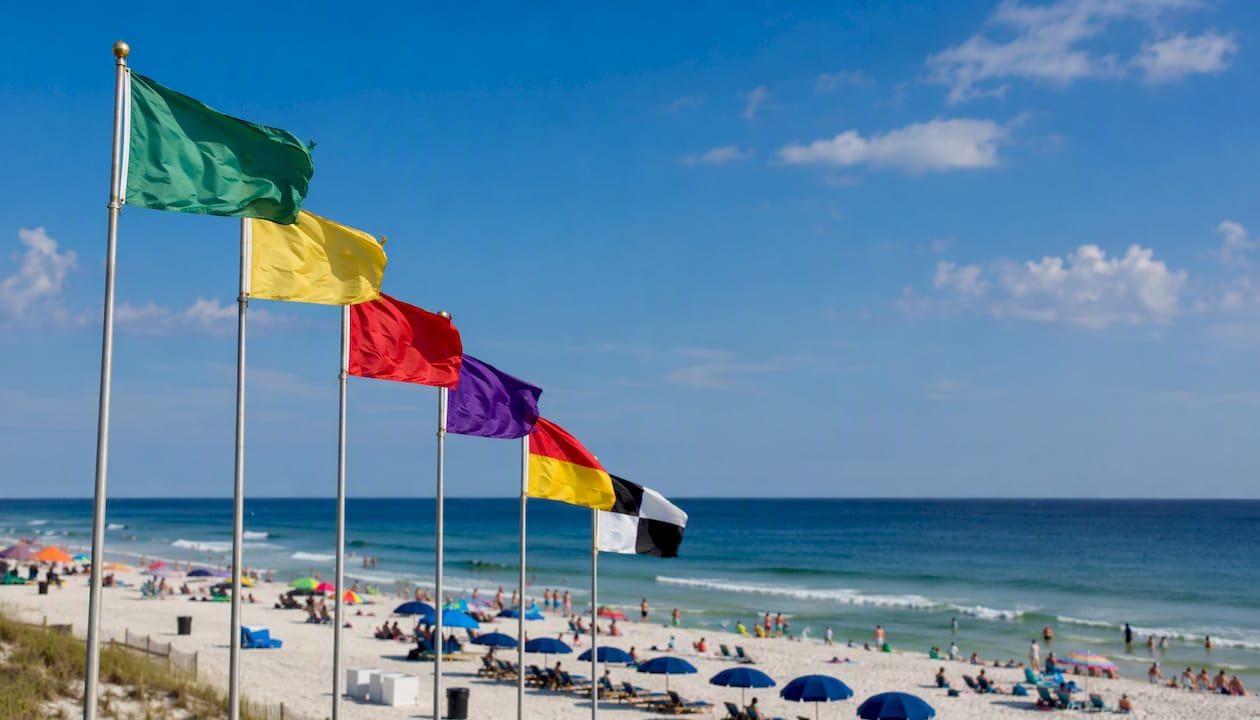
Florida uses a state-mandated, uniform color flag system to signal water hazard levels and types at every public beach. Each color tells you exactly what to do before you step in the water.
Flag | Meaning | Action |
🟢 Green | Low hazard, calm conditions | Swim, but stay alert |
🟡 Yellow | Medium hazard, moderate surf/currents | Swim with caution |
🔴 Red | High hazard, strong surf or currents | Strong swimmers only |
🔴🔴 Double Red | Water closed to the public | Do not enter — enforceable by law |
🟣 Purple | Dangerous marine life present | Swim at your own risk; watch for jellyfish, stingrays |
🔴🟡 Red/Yellow (halved) | Lifeguarded swim zone | Swim here for best supervision |
⬛⬜ Black/White (quartered) | Watercraft zone | No swimming; boats and boards only |
🟡⚫ Yellow with black ball | Non-powered watercraft prohibited | Swimmers and powered craft only |
🟠 Orange windsock | Offshore winds present | Inflatables and rafts at serious risk |
Flags can change multiple times in a single day. Always check the flag at your specific beach access point, not just the one you saw an hour ago. Panama City Beach posts and updates flags at each lifeguard tower and encourages visitors to verify conditions before entering the water.
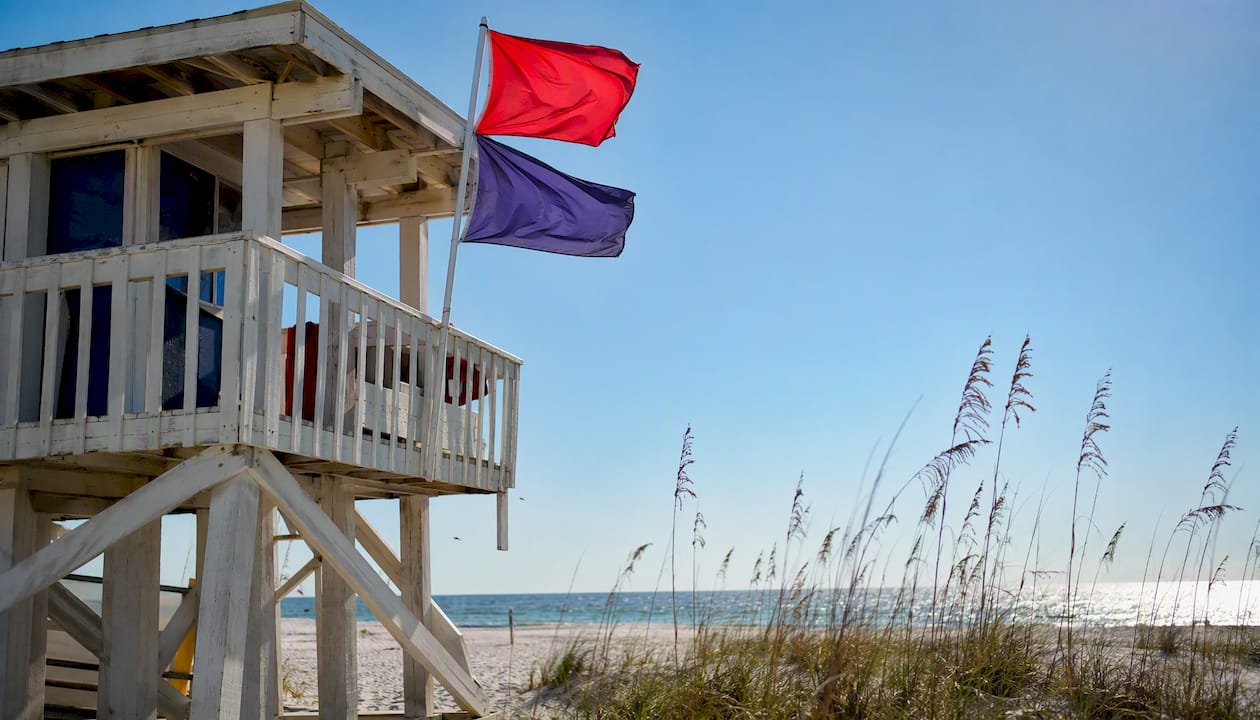
Double red is the one that carries real legal weight. Entering the water during a double red flag is prohibited and can result in fines or arrest under local ordinance. No wave is worth that.
The National Weather Service notes that calm-looking surface water can still hide dangerous rip currents, which is exactly why the flag system exists. A glassy surface is not a green flag.
Key Takeaways
Florida’s beach flag system gives every beachgoer a clear, color-coded hazard signal, and double red means the water is legally closed.
Point | Details |
Double red = water closed | Entering is prohibited and may result in fines or arrest under local ordinance. |
Flags change throughout the day | Check the flag at your specific access point every time you return to the water. |
Purple flag = marine life hazard | Watch for jellyfish and stingrays; swim at your own risk when purple is flying. |
Rip current escape | Stay calm, swim parallel to shore, then angle back to the beach. |
Best-supervised swim zone | Look for the paired red/yellow halved flag marking the lifeguarded area. |
Pro Tip: Sign up for Panama City Beach’s text alert service before your trip so you get flag updates pushed to your phone before you leave for the beach.
Table of Contents
What local operators know about reading beach flags
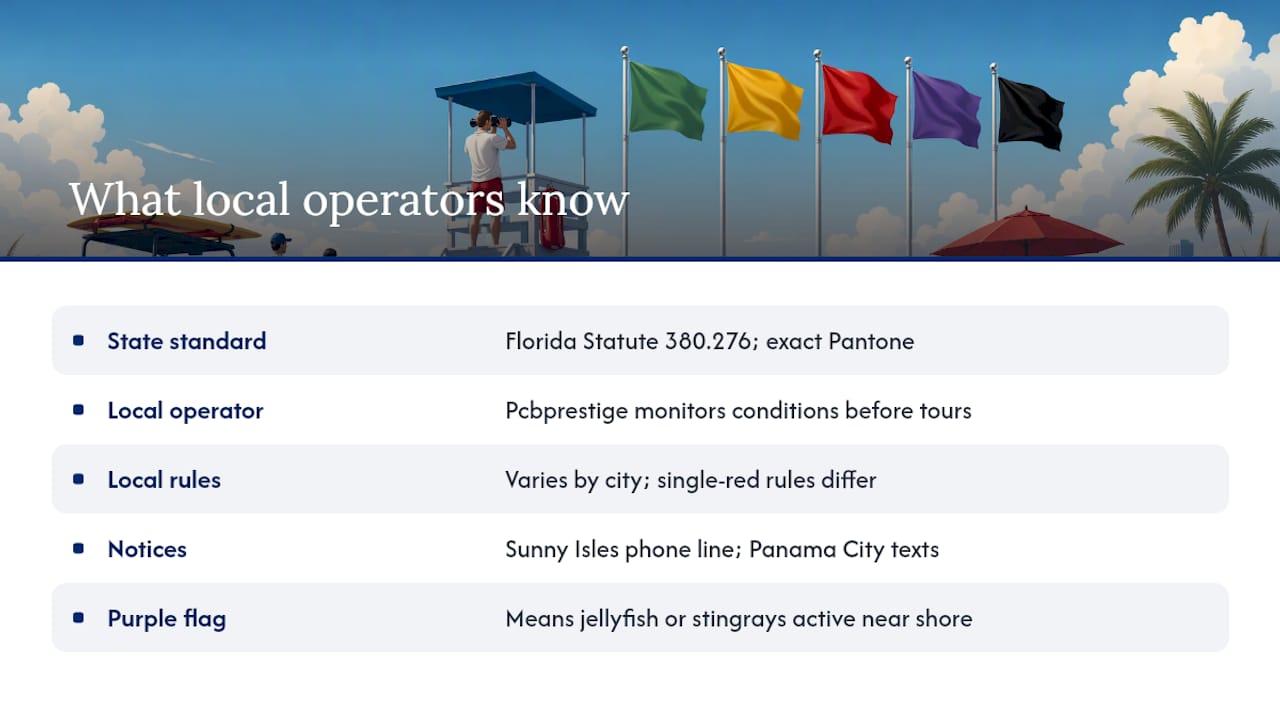
Flags are the most reliable single visual cue on any Florida beach. They are standardized under Florida Statute 380.276, with exact Pantone color values and construction specs set by the Florida Department of Environmental Protection, and endorsed by the United States Lifesaving Association for consistency across jurisdictions.
That said, municipalities retain discretion. Some cities prohibit wading during a single red flag; others allow experienced swimmers near a staffed lifeguard tower. The City of Sunny Isles Beach, for example, records a daily beach-conditions phone line message so visitors can check before leaving their hotel. Panama City Beach offers a text alert option for real-time updates.
As a local operator, Pcbprestige monitors conditions before every private dolphin and snorkeling tour. A purple flag, for instance, often means jellyfish or stingrays are active near shore. Knowing what’s in the water matters as much for a family dolphin tour as it does for a solo swim. Check the jellyfish sting treatment guide if you encounter marine life hazards.
Where to find official flag information
Source | What it provides |
Florida Statute 380.276 | Legal basis for the statewide uniform flag program |
Official Pantone colors, flag sizes, and materials | |
National and international standard context | |
Daily local updates, tower locations, text alerts | |
Local enforcement details including double red penalties | |
Rip current flag definitions and hazard guidance |
For rip currents specifically, the Panama City Beach rip current guide covers local escape techniques in detail. General Destin water safety practices also apply across the Panhandle.
Posted interpretive signs at lifeguard towers explain each flag on-site. When in doubt, ask the lifeguard on duty. They update flags in real time and know the specific conditions at that stretch of beach better than any app.
Planning water activities in Panama City Beach? Pcbprestige runs fully private tours on a 26-foot powerboat with a licensed local captain who checks conditions before every departure. Book your private tour and let the captain handle the flag-watching.
Sources
Recommended
Comments