Snorkeling While Pregnant: Safety Tips and What to Know
- PCB Prestige
- Jul 29
- 10 min read
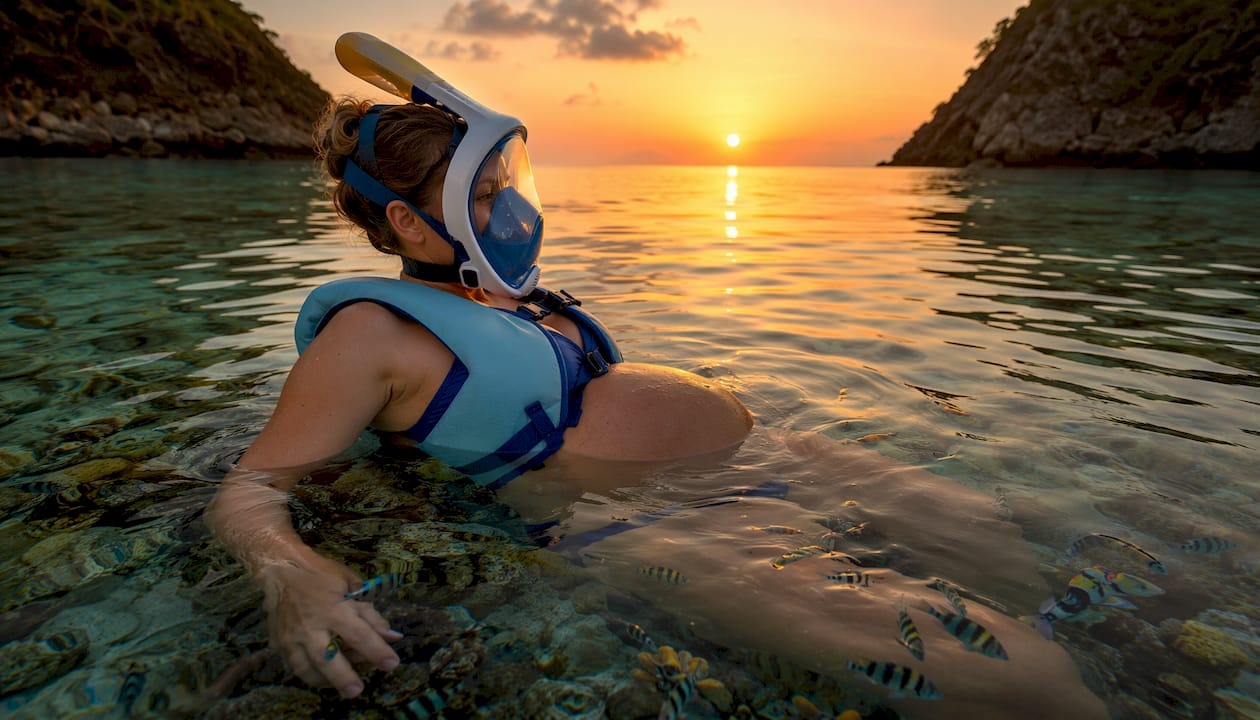
Snorkeling while pregnant can be safe for many people with uncomplicated pregnancies, but only with written medical clearance, calm shallow water, and a conservative approach to exertion. The short answer is: yes, with conditions. The longer answer depends on your trimester, your health history, and how the trip is structured.
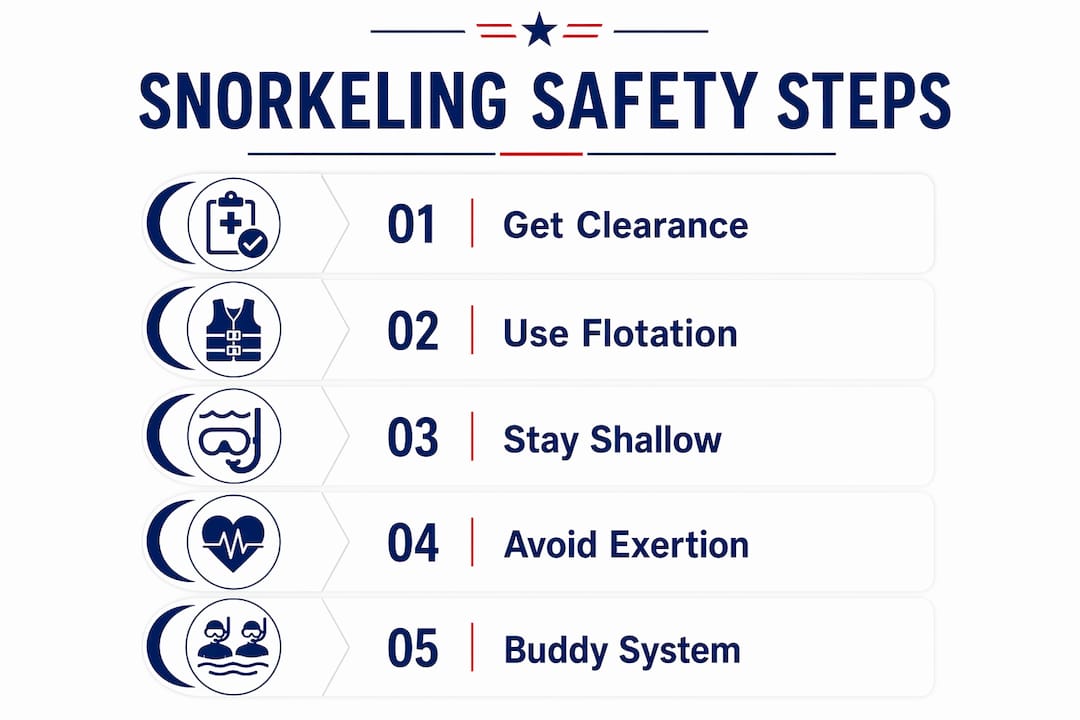
Before you go any further, run through these three checks:
Get written clearance from your OB or midwife that specifically names “snorkeling,” your trimester, and any recommended limits on duration or exertion. A general “light activity is fine” note is not enough.
Only snorkel in calm, shallow water where you can stand. Waist-to-chest depth is the target. If you can’t touch bottom, you’re in the wrong spot.
Never snorkel alone, and stop at the first sign of breathlessness, dizziness, or fatigue. These are not discomforts to push through.
One critical distinction: scuba diving is a completely different activity and should be avoided during pregnancy. Scuba diving is contraindicated because the fetus is not protected from decompression problems and faces real risk of gas embolism. Snorkeling stays at the surface. Scuba does not. They are not interchangeable.
Table of Contents
Is snorkeling while pregnant really different from casual swimming?
Yes, and the difference matters more than most people expect. Snorkeling is not just swimming with a mask. It adds breathing resistance, face-down positioning, and a tube that forces you to work slightly harder with every breath. For a pregnant body already running at a higher physiological baseline, that extra load is worth understanding.
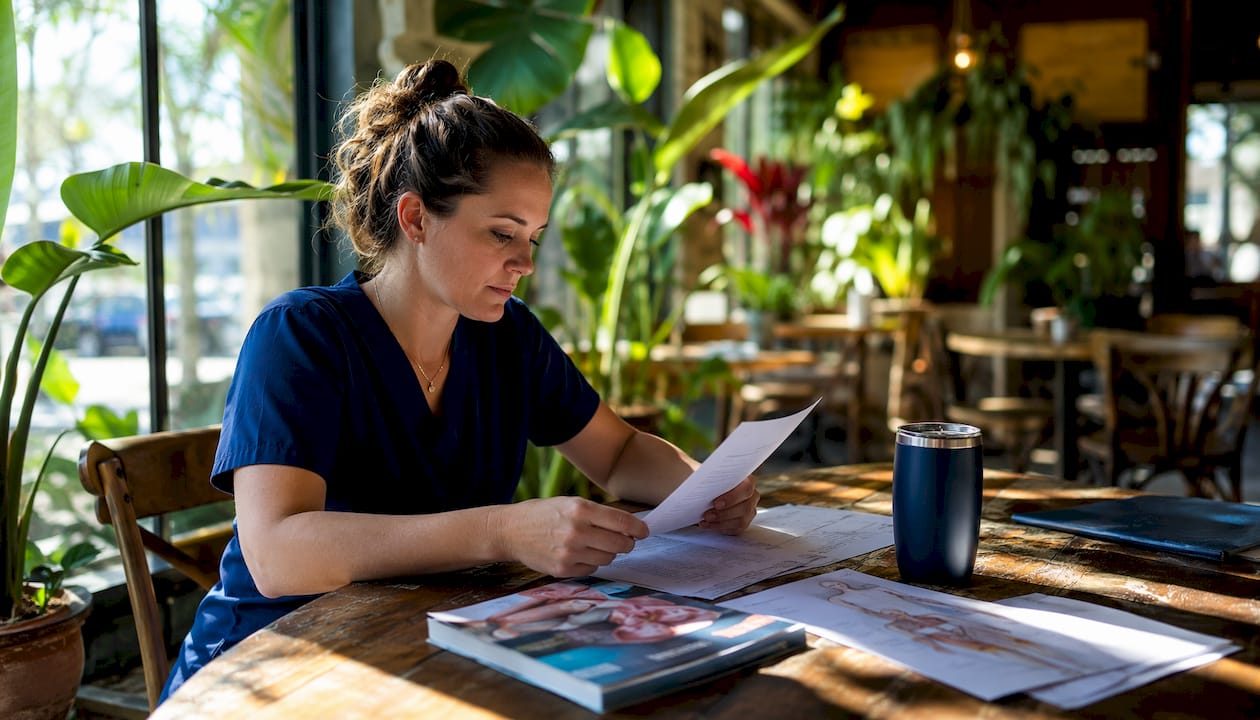
Pregnancy increases blood volume, which raises baseline cardiac output and reduces your physiological reserve. Your diaphragm is being pushed upward by a growing uterus, which compresses lung capacity. Add snorkel breathing resistance on top of that, and you’re asking a system with less margin to do more work.
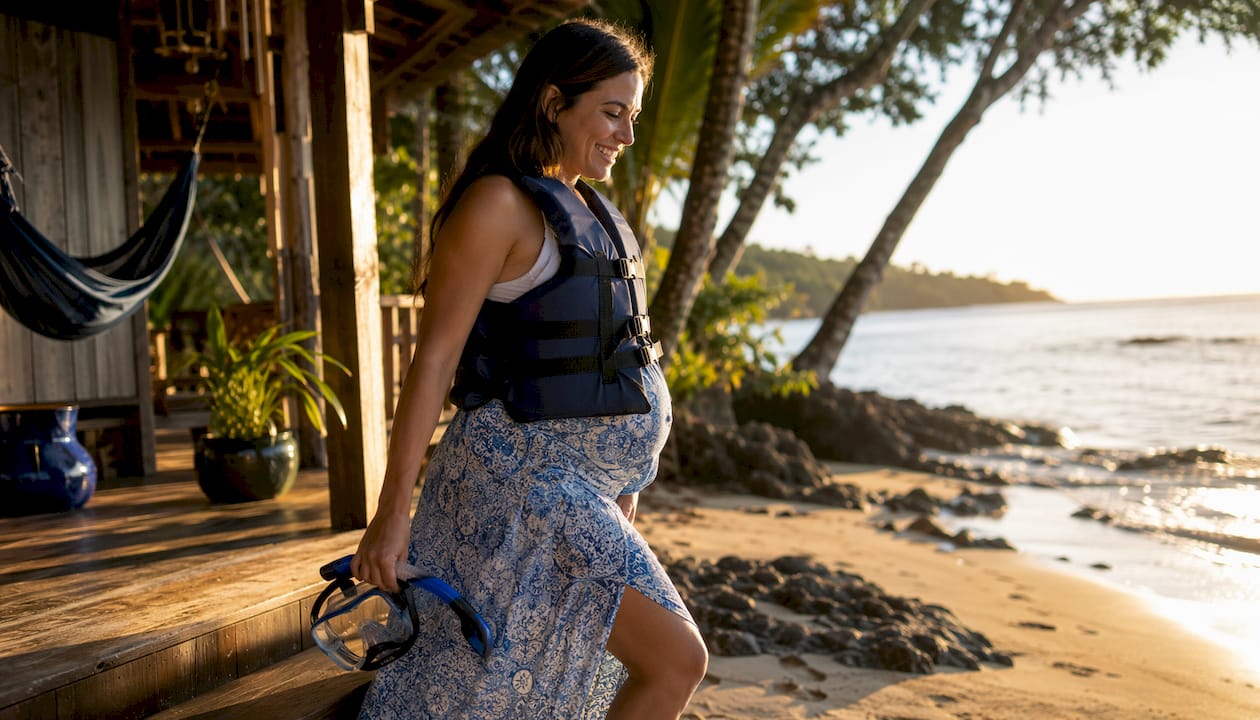
The specific risk to watch for is SI-ROPE: Snorkel Induced Rapid Onset Pulmonary Edema. Snorkel breathing increases negative intrathoracic pressure, and in pregnancy that added respiratory workload can trigger pulmonary edema quickly if exertion increases. It can come on in minutes, which is why “I’ll just take it easy” is not a sufficient plan.
Physiological factor | Pregnancy change | Snorkeling relevance |
Blood volume | Increases 30% | Higher cardiac baseline, less reserve |
Diaphragm position | Elevated by uterus | Reduced lung capacity |
Snorkel breathing | Adds inhalation resistance | Increases negative chest pressure |
Fetal oxygen supply | Dependent on maternal oxygenation | Any respiratory stress affects the fetus |
The real benefits of shallow water activity are genuine: hydrostatic pressure can reduce lower-limb swelling and relieve joint pressure. Gentle aquatic activity, when exertion stays low, is one of the more comfortable things a pregnant person can do. The goal is to capture those benefits without triggering the respiratory risks.
What conditions make snorkeling unsafe during pregnancy?
Snorkeling is not a low-risk activity, and for some pregnancies it should be avoided entirely. Your clinician needs to know the full picture before clearing you.
Conditions that typically make snorkeling inadvisable:
Cardiac disease or arrhythmia (any condition that limits cardiovascular response to exertion)
Pulmonary disease or asthma that is not well-controlled
Hypertension or preeclampsia
Multiple pregnancy with complications (twins or more with any flagged risk)
Placenta previa with active bleeding risk
Recent hospitalization for any pregnancy-related complication
Clinician-advised activity restriction for any reason
The clearance note matters in its specifics. A written clearance that names “snorkeling” and states any recommended limits (trimester, session duration, depth, exertion level) gives you and your tour operator something concrete to work from. Verbal reassurance does not.
Recent long-haul air travel adds another layer. Experts advise waiting several days after a long flight before snorkeling when possible, because post-flight timing is part of clinical risk assessment. Altitude exposure and cabin pressure changes can affect circulation, and combining that with snorkel exertion on arrival day is not a conservative choice.
How do the risks change by trimester?
Each trimester brings different considerations, and the right answer for a 12-week pregnancy is not the same as for a 32-week one.
First trimester
The first trimester carries the highest risk of miscarriage, and many clinicians advise avoiding unaccustomed physical activity during this period. Nausea and fatigue are also common, which makes exertion harder to gauge accurately. If you’re experiencing morning sickness, snorkeling in choppy water is a bad combination. Get clearance, and be honest with your clinician about how you’ve been feeling.
Second trimester
The second trimester is often the physiologically easiest window. Energy tends to return, nausea typically eases, and the cardiovascular changes are more stable. At around 20 weeks, snorkeling in very shallow, calm water with clearance and flotation support is generally the most defensible choice. That said, “easiest trimester” does not mean “no risk.” The cardiac and respiratory changes described above are fully present by this point.
Third trimester
By 30+ weeks, the growing belly changes your center of gravity, complicates buoyancy, and makes getting in and out of the water more physically demanding. Cardiovascular load is at its peak. Many clinicians advise against snorkeling in the third trimester, or at minimum strongly prefer observation from a shaded boat deck over active water entry. A private boat tour where you watch dolphins and marine life from the deck may be the better call at this stage.
The rule that holds across all three trimesters: avoid exertion, never hold your breath, stay where you can stand, and stop at the first sign of any warning sign.
Pro Tip: If you’re unsure whether your trimester qualifies as “low risk,” ask your clinician specifically: “Is snorkeling in waist-deep, calm water for 15 minutes an activity you’d clear me for in writing?” That framing gets you a specific answer instead of a general one.
A practical safety checklist for expecting mothers snorkeling
Before you go
Obtain written medical clearance naming “snorkeling” and any limits
Review the tour itinerary and confirm access to medical care near the departure point
Choose a private or small-group tour over a crowded one
Inspect mask and snorkel fit before entering the water
Wait several days after a long flight before snorkeling
During the session
Stay in waist-to-chest-deep water where you can stand at any moment
Wear a flotation vest; do not rely on swimming ability alone
Brief your buddy on your stop signs before you enter the water
Keep sessions short (10–20 minutes) with rest breaks between
Monitor hydration and avoid overheating; exit to shade regularly
After the session
Monitor for unusual shortness of breath, chest tightness, or persistent dizziness
Pay attention to fetal movement in the hours after snorkeling
Seek urgent care if any symptoms occur or if fetal movement seems reduced
Pro Tip: “Stay where you can stand” is not just a comfort tip. Snorkel incidents disproportionately happen where swimmers cannot touch the bottom. Standable depth gives you an immediate exit ramp that eliminates a large class of emergencies.
Which snorkel gear reduces breathing resistance?
Gear choice has a direct effect on respiratory workload, and that matters more in pregnancy than in most other contexts.
A classic snorkel-and-mask setup is the safer starting point. The breathing path is straightforward, the resistance is predictable, and the design has decades of documented use. Full-face snorkel masks are a different story. In a survey of snorkel incidents, 38% of participants had used a full-face mask, and 90% of those users considered it a contributing factor in their trouble. Full-face designs increase dead space (the air you re-breathe) and change breathing patterns in ways that can be hard to detect until you’re already in trouble.
Stat to know: In that same survey, 9 in 10 full-face mask users who experienced difficulty identified the mask as a contributing factor. For a pregnant snorkeler, that risk profile is not worth it.
For flotation, a properly fitted life vest or snorkel vest reduces the physical effort of staying at the surface, which directly lowers cardiac and respiratory demand. Belt floats and inflatable buoys are secondary options, but a vest is the most reliable. Less effort in the water means more reserve if something unexpected happens.
Motion sickness is a real concern, especially on a boat ride to the snorkel site. Choose calm-weather days, avoid eating heavily before departure, and consult your clinician before taking any anti-nausea medication. Many common motion-sickness remedies are not cleared for pregnancy.
How does the boat trip itself affect safety?
The boat ride to the snorkel site is part of the risk equation, not just the snorkeling itself. The CDC advises reviewing the full travel itinerary for pregnant travelers, including transit conditions and access to local medical care. A bumpy 45-minute offshore run in choppy water is a different experience than a 10-minute calm-water transit to a protected cove.
Before booking, confirm:
The route stays in calm, protected water
The captain has experience with pregnant guests and knows how to handle a quick return to shore
There is an onboard bathroom (critical for third-trimester comfort and for avoiding unnecessary physical strain)
Shade and hydration are available on deck
The transit time is short enough that a medical situation can be addressed quickly
Remote locations and long offshore transfers increase risk by extending the time between a problem and medical care. The CDC’s guidance for pregnant travelers is clear that local medical access matters as much as the activity itself. Choosing a tour that departs from a marina close to shore, with a short transit to a calm, shallow snorkel site, is a structural safety decision, not just a comfort preference.
If you’re planning a trip to Panama City Beach, staying close to the departure point reduces transit stress. Panama City Beach vacation rentals near the marina can cut your travel time to the boat significantly.
What to do if you feel unwell in the water
Speed matters here. If anything feels off, the right response is immediate, not cautious.
Stop swimming. Do not try to reach a particular spot or finish the session.
Roll onto your back to open your airway and reduce exertion.
Remove the snorkel and breathe fresh air directly.
Signal your buddy and the boat immediately using your pre-agreed signal.
Stand up if depth allows and walk toward shore or the boat ladder.
Exit the water and sit or lie down in a shaded area.
Seek medical evaluation if shortness of breath, chest tightness, dizziness, or nausea persists after resting.
Warning signs that require urgent evaluation, not watchful waiting:
Sudden shortness of breath or chest pain
Severe dizziness or near-collapse
Decreased fetal movement in the hours after the event
Any symptom that does not resolve within a few minutes of rest
Call 911 if symptoms are severe or worsening. Keep your clinician’s contact information and a summary of your pregnancy details accessible while traveling, not just on your phone at the hotel.
Why private, captain-guided tours are a safer option for pregnant snorkelers
Private, captain-guided tours reduce several of the environmental risks identified above by giving you operational control that a crowded group tour simply cannot offer. The CDC’s emphasis on itinerary review maps directly onto what a private charter can provide: a route chosen for calm, shallow water; flexible timing; and the ability to return to shore immediately if needed.
Questions to ask any operator before booking:
Can the captain keep the snorkel site in waist-to-chest-deep, calm water?
Is there a private boarding area that avoids crowded docks?
Is snorkel equipment included and can it be fitted before water entry?
Is there shade and a bathroom on board?
Can the tour be paused or ended immediately if a guest feels unwell?
Pcbprestige operates private Shell Island snorkeling tours on a 26-foot powerboat with a licensed captain, an onboard bathroom, and fully tailored itineraries. The private charter format means the captain works around your needs, not a group schedule. For a pregnant guest, that flexibility is the difference between a tour that can adapt to how you feel and one that cannot. Disclose your pregnancy at booking and bring your written medical clearance. Pcbprestige’s intake form lets you specify shallow-water preferences and any health considerations before you arrive, so the captain can plan accordingly.
For families planning the full trip, family-friendly dolphin tours at PCB Prestige are structured with safety and comfort as the baseline, not an afterthought.
Key Takeaways
Snorkeling while pregnant can be safe with written medical clearance, shallow calm water, a flotation vest, and a buddy, but requires stopping immediately at any sign of breathing difficulty.
Point | Details |
Get written medical clearance | Ask your clinician to name “snorkeling” specifically and state any trimester or duration limits. |
Stay in standable water | Waist-to-chest depth with flotation eliminates the largest class of snorkel emergencies. |
Stop at breathing trouble | SI-ROPE can develop quickly; exit immediately at any sign of increased breathing effort. |
Scuba is different | Scuba diving should be avoided entirely during pregnancy; snorkeling and scuba are not the same activity. |
Pcbprestige for private tours | Pcbprestige’s private, captain-guided Shell Island tours offer onboard bathrooms, tailored shallow-water itineraries, and immediate return-to-shore capability. |
The ocean can wait — and that’s not a bad thing
Most snorkeling safety guides focus on what you can do. This one focuses on what can go wrong, because the physiology of pregnancy genuinely changes the risk profile in ways that aren’t obvious from the surface.
The conservative stance here is intentional. Breathing resistance, reduced lung reserve, and a fetus whose oxygen supply depends entirely on yours are not abstract concerns. They’re the reason “I’ll just float around and look at fish” is a different proposition at 28 weeks than it was before pregnancy. The good news is that the ocean isn’t going anywhere. A private boat tour where you watch dolphins from the deck, feel the Gulf breeze, and let your partner or kids snorkel while you stay comfortable on board is still a genuinely great experience. Prioritizing easy exits and low exertion over sightseeing depth isn’t a compromise. It’s the smarter call.
Book a private, low-exertion snorkeling tour designed for safety and comfort
For pregnant snorkelers who want a controlled, low-exertion on-water experience, a private charter is the practical choice over a crowded group tour. Pcbprestige’s private dolphin and snorkeling tours in Panama City Beach run on a 26-foot powerboat with a licensed captain, an onboard bathroom, shade, and fully flexible itineraries. The captain can keep you in calm, shallow water the entire time and return to shore immediately if you need it.
When you book, disclose your pregnancy and bring your written medical clearance. Use the intake form to request a shallow-water route and note any health considerations before your tour date. For those in the third trimester or preferring to stay dry, the 2-hour sunset cruise is a beautiful, zero-exertion alternative. Book your private tour online and confirm your itinerary preferences at the time of reservation.
Useful sources to read before you go
These are the primary sources worth bringing to your clinician appointment. Print or bookmark them and ask your provider to review the snorkeling-specific sections with you.
Source | What it covers |
CDC Yellow Book: Pregnant Travelers | Official CDC guidance on travel, activity, and itinerary review for pregnant travelers |
NCBI Bookshelf: Yellow Book 2026 Edition | Full clinical text including the scuba contraindication and snorkeling note |
PubMed: Diving and Pregnancy | Peer-reviewed review of physiological diving risks in pregnancy; confirms snorkeling is distinct from scuba |
Pcbprestige Private Tours | Private snorkeling tour options in Panama City Beach with safety-focused itineraries |
This article is general information, not medical advice. Confirm current guidelines and your personal situation with your OB, midwife, or a qualified healthcare provider before any water activity during pregnancy.
Recommended
Comments