Dolphin Mating Season Florida: Best Time to Visit PCB
- PCB Prestige

- Jul 30
- 8 min read
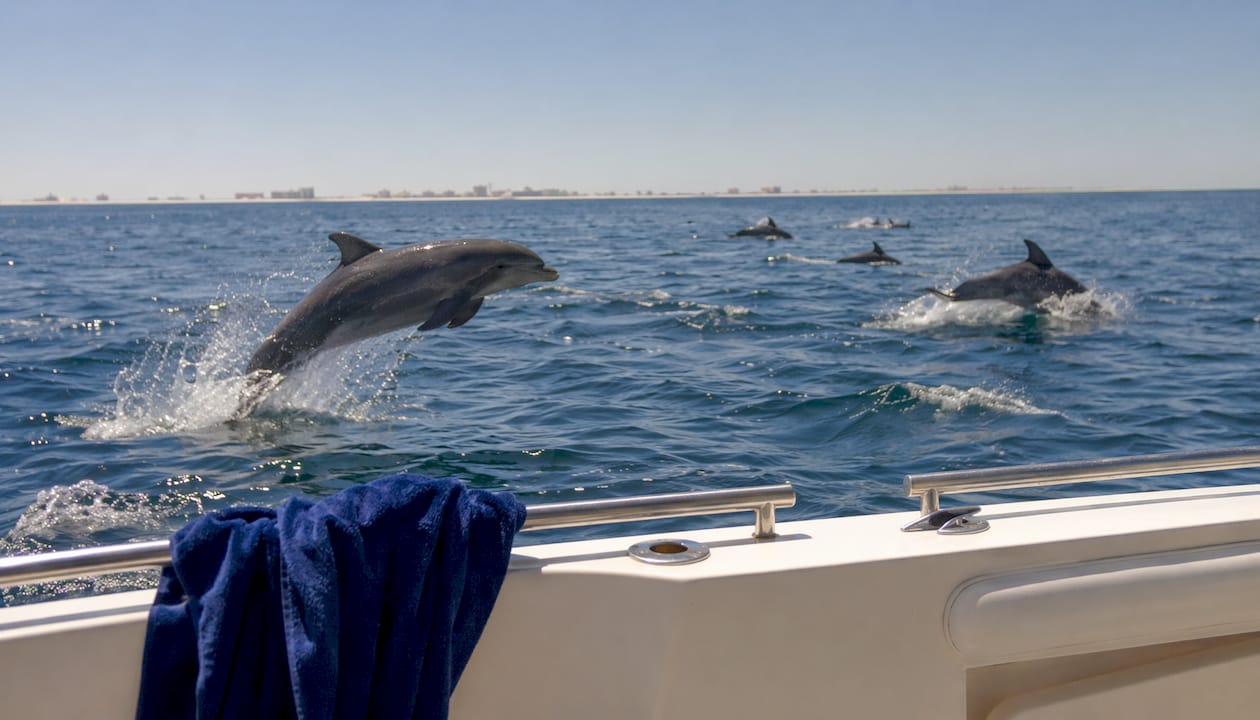
Florida bottlenose dolphins don’t follow a single mating calendar. Reproductive activity peaks from spring through early fall, with calving concentrated in May through July along the Gulf coast. For Panama City Beach visitors, that window is the sweet spot.
TL;DR for tour planners:
Best months for calf sightings: May through July, with activity continuing into August along the Gulf coast
What you’ll likely see: Mother–calf pairs in shallow bays, social pods, and surface-active behaviors like breaching and tail slapping
Ethical reminder: Never approach, feed, or chase wild dolphins; observe from a respectful distance and let them come to you
Research on Sarasota Bay dolphins found that most births occurred during May–July, which aligns closely with Gulf-coast timing near Panama City Beach.
Table of Contents
Is there really a dolphin mating season in Florida?
Technically, no. Bottlenose dolphins are seasonally polyestrous, meaning females cycle through multiple estrous periods per year rather than locking into one annual breeding window. A female’s cycle runs several weeks, and she ovulates multiple times annually. That flexibility is the whole point: timing births to warmer water and better food availability gives calves a stronger survival start.
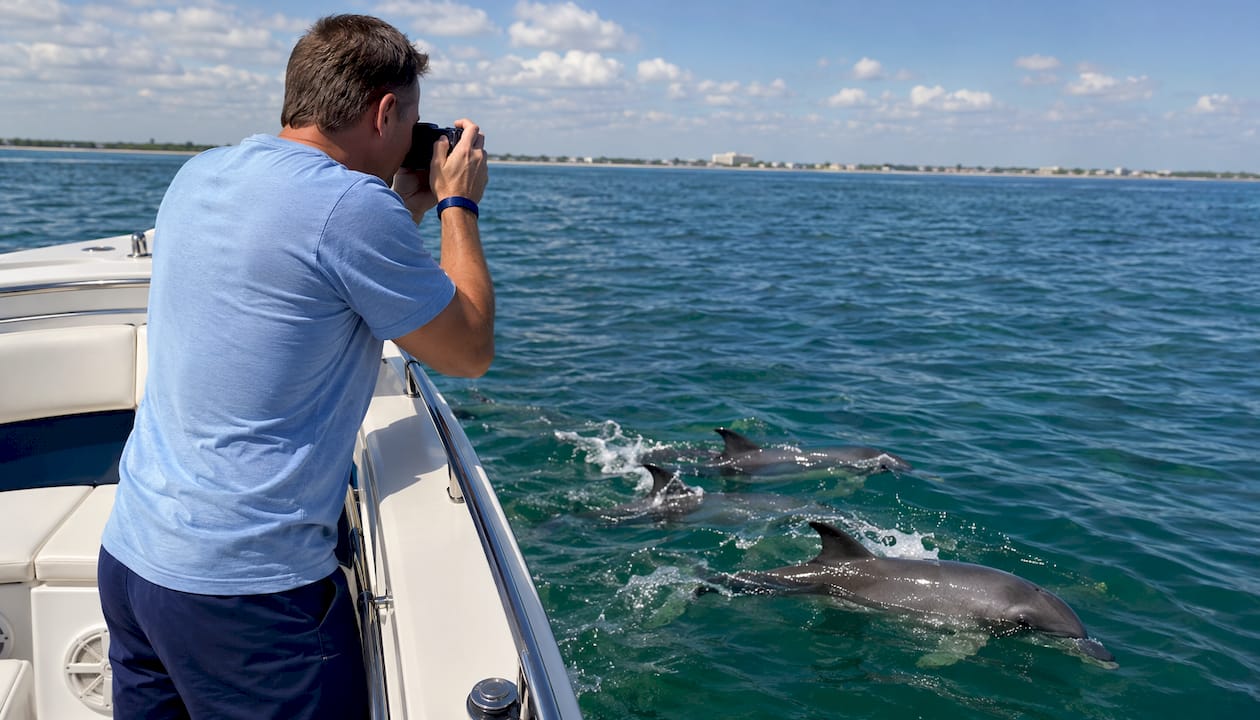
What this means practically is that mating behavior can occur year-round, but the peaks are real and predictable. Warmer months bring higher hormone levels in both sexes, more aggressive male alliance behavior, and a surge in newborn calves. Females in Florida waters reach sexual maturity in early to mid adulthood; males mature somewhat later, and often form cooperative alliances to court females.
Environmental literacy research frames this flexibility as an evolutionary advantage: populations that can shift breeding timing in response to environmental conditions produce more surviving calves over generations. So “dolphin mating season Florida” is less a fixed date on the calendar and more a biological tendency that peaks when conditions are right.
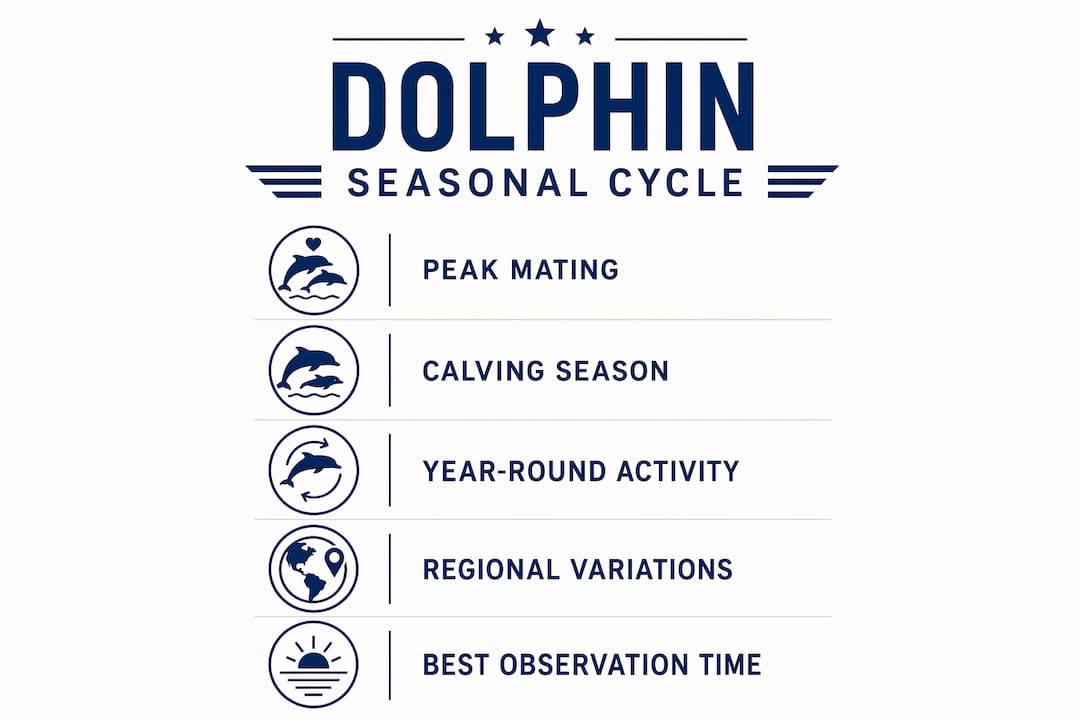
When are you most likely to see calves near Panama City Beach?
Late May through July is your best window. Along Florida’s Gulf coast, the calving peak mirrors the Sarasota Bay data closely, with late spring through early summer producing the highest density of newborns. Randall Wells, one of the country’s leading dolphin researchers, consistently points to late spring and summer as the most rewarding time for seeing calves and strong mother–calf bonds in shallow coastal bays.
Regional variation matters. The UNF Dolphin Research Program found that in the St. Johns River on Florida’s northeast coast, mating activity peaks in late winter to early spring. The Gulf coast runs warmer and later. Panama City Beach sits squarely in Gulf-coast territory, so the May–August window applies well here.
UNF researchers also identified that some Florida estuaries host both year-round resident dolphins and a summer influx of transient animals, which means sighting frequency can spike even beyond the resident population during peak months.
Seasonal planning at a glance:
Month | Likely sightings | Booking lead time | Typical tour length |
April–May | Early calves, active pods | 1–2 weeks | 2–3 hours |
June–July | Peak calves, mother–calf pairs | 2–4 weeks | 2–3 hours |
August | Some late calves, feeding activity | 1–2 weeks | 2–3 hours |
October–March | Resident pods, fewer calves | Days to 1 week | 2–3 hours |
Pro Tip: Book morning departures during June and July. Calmer water and lower boat traffic in the early hours mean dolphins in shallow bays are less disturbed, and mother–calf pairs tend to stay closer to the surface.
For more local timing detail, Pcbprestige’s dolphin spotting guide breaks down sighting patterns by season.
What will you actually see on a private dolphin tour?
Set realistic expectations before you board. Most tours encounter traveling pods of a few to several dolphins, feeding flashes where dolphins herd fish near the surface, and frequent breach or tail-slap displays. During calving season, shallow coastal bays are where the action concentrates: mother–calf pairs stay in calmer, warmer water close to shore, which puts them right in the path of a well-positioned private boat.
Courtship behavior looks different from play. Males in alliance groups will pursue a single female persistently, sometimes for hours, with tight formation swimming and frequent surfacing. It’s intense and unmistakable once you know what to look for. Playful social behavior, by contrast, involves loose groups, bow-riding, and acrobatics with no clear directional intent.
Calves are easy to spot: they’re smaller, surface more frequently to breathe, and stay within a body-length of their mothers. Nursing happens underwater, but you’ll often see the calf tucked tight to the mother’s flank just below the surface.
Private boats make a genuine difference here. Smaller groups mean the captain can cut the engine and drift quietly while dolphins approach on their own terms. Crowded vessels create noise and movement that push animals away. For swimming with wild dolphins, the same principle applies: calm, patient presence yields far closer encounters than active pursuit.
How to watch dolphins responsibly under U.S. law
The Marine Mammal Protection Act makes harassing wild dolphins a federal offense, and NOAA enforces it. “Harassment” covers more than it sounds: chasing, feeding, separating a mother from her calf, or approaching in a way that changes the animal’s behavior all qualify.
“Approaching too closely, making sudden movements, or feeding wild dolphins can disrupt natural behaviors, cause stress, and even lead to injury. NOAA recommends staying at least 50 yards from wild dolphins and never feeding them — fed dolphins lose their natural foraging instincts and can become dangerously dependent on humans.” — NOAA guidance on wild dolphin interactions
Operator best practices go beyond the legal minimum:
Approach at idle speed from the side, never head-on
Cut the engine when dolphins are within close range and let them choose to stay
Never position the boat between a mother and calf
Limit time near any single pod to avoid repeated disturbance
If a dolphin appears injured, entangled, or stranded, call the NOAA Fisheries hotline rather than attempting rescue
As a guest, keep your camera ready but stay quiet when dolphins are close. Sudden shouts or movement toward the rail can spook animals that were about to approach. The best footage usually comes from guests who stayed still.
What to bring and what to expect on a Panama City Beach private tour
Bring with you:
Reef-safe sunscreen (spray-on sunscreen can contaminate water; use lotion)
Polarized sunglasses (cuts surface glare and helps you spot fins)
Motion-sickness remedy if you’re prone (take it 30–60 minutes before departure)
Light layers for early-morning or evening tours
A waterproof phone case or camera bag
Pcbprestige provides all snorkel gear, so you don’t need to pack fins or masks. The 26-foot powerboat includes a bathroom, which matters more than it sounds on a 3-hour trip with kids.
Private tours in Panama City Beach typically run 2–3 hours. For families targeting dolphin-and-snorkel combinations, the 3-hour private tour covers both dolphin watching in the bay and snorkeling near Shell Island. Book 2–4 weeks ahead for June and July; April, May, and August usually need only a week’s notice. Most operators offer weather-related reschedule policies, so ask about that before you confirm.
For broader Florida Panhandle trip planning, scenic panhandle tour options can help you build a fuller itinerary around your dolphin tour dates.
How to choose an ethical private dolphin tour operator
Not all boats are equal. Here’s what to verify before you book:
Licensed captain: Ask for USCG documentation number and verify the captain holds a valid USCG Master’s license.
Wildlife interaction policy: A reputable operator will describe their approach protocol unprompted. If they can’t explain how they handle dolphin encounters, that’s a red flag.
Private charter exclusivity: Confirm your group is the only party on the boat. Shared boats compromise both privacy and the captain’s ability to manage approach behavior.
Maximum group size: Private tours capped at 6 guests allow the captain to focus on wildlife positioning rather than crowd management.
Insurance and safety equipment: Life jackets for all ages, a first-aid kit, and VHF radio are non-negotiable.
Cancellation and reschedule policy: Weather on the Gulf can shift fast. Know the policy before you pay.
Local knowledge: A captain who works these waters year-round knows where resident pods feed, where calves appear in early summer, and which bays are worth the detour.
Private, captain-guided tours consistently produce better wildlife encounters than large commercial vessels. Smaller wakes, quieter engines, and a captain who can make real-time routing decisions all contribute. Why private tours deliver more comes down to one thing: the boat moves for the dolphins, not for a schedule.
Key Takeaways
Florida’s Gulf-coast dolphin calving peak runs May through July, making late spring and early summer the best time to book a private tour in Panama City Beach for mother–calf sightings.
Point | Details |
No single mating season | Bottlenose dolphins are seasonally polyestrous; reproductive peaks tend to align with warmer months, not a fixed calendar date. |
Peak calving window | 81% of Sarasota Bay births fell in May–July, closely matching Gulf-coast timing near Panama City Beach. |
Best booking months | Late spring through early summer offers peak calf sightings; booking a few weeks ahead is recommended. |
Ethical viewing rules | Federal law (Marine Mammal Protection Act) prohibits harassment; stay 50+ yards away and never feed wild dolphins. |
Pcbprestige private tours | Up to 6 guests on a 26-foot private powerboat with a licensed captain, snorkel gear included, and an ethical wildlife approach policy. |
What patience actually gets you on the water
Most guests arrive expecting dolphins to perform on cue. What they find instead is something quieter and more memorable: a mother and calf surfacing together in a shallow bay, close enough to hear the exhale, while the boat sits still and the captain says nothing. That moment doesn’t happen on a crowded vessel running a fixed route.
The science backs up what experienced captains already know: late spring and summer in Gulf-coast bays produce the highest density of calves and the most consistent mother–calf behavior. But the biology only gets you so far. The rest is patience, a small group, and a captain who knows when to cut the engine and wait.
Guests who’ve been on large commercial tours often describe the experience as a distant glimpse. Private charters change the geometry entirely. When you’re the only group on the water, the captain can hold position, drift quietly, and let the dolphins decide whether to approach. They usually do.
Justin’s perspective on this is straightforward: the best dolphin encounters aren’t engineered, they’re earned by staying calm and giving the animals space. That’s the approach Pcbprestige builds every tour around.
Book a private dolphin tour with Pcbprestige
If you want to see calves up close during peak season without sharing the boat with strangers, Pcbprestige offers exactly that.

The 3-hour private dolphin and snorkeling tour covers dolphin watching in the bay and snorkeling near Shell Island, all on a 26-foot private powerboat with a licensed local captain and all snorkel gear included. Groups are capped at 6 guests, the itinerary is flexible, and the wildlife approach follows NOAA best practices. For families with young kids, the onboard bathroom and private setup make a real difference on a 3-hour trip.
Peak months fill up fast. Book your private tour online to lock in your preferred date, or check available tour options if you’re deciding between dolphin-focused and sunset departures.
Useful sources and further reading
The following sources informed this article. They’re worth bookmarking if you want the full marine-science picture or need to verify NOAA regulations before your trip.
Frontiers in Marine Science: Sarasota Bay bottlenose dolphin life history and reproduction — the most detailed long-term dataset on Florida Gulf-coast dolphin reproduction, including the May–July calving peak figure
SeaWorld: All About Bottlenose Dolphins — Reproduction — accessible summary of estrous cycles, gestation, and maturation ages
UNF Dolphin Research Program — Northeast Florida regional data, including St. Johns River population structure and seasonal mating patterns
Environmental Literacy: When and where do dolphins mate? — overview of mating flexibility and evolutionary context
News-Press: Randall Wells interview on calving season — expert field perspective on Gulf-coast calf sighting windows
Study.com: Dolphin Mating and Reproduction — introductory-level summary of gestation and species variation
NOAA Fisheries — consult directly for current approach-distance guidelines and Marine Mammal Protection Act enforcement details
Pcbprestige marine life guide — Panama City Beach species and tour planning resources from the local operator
Recommended
Comments