The Best Boat Day Snacks: No-Mess Ideas That Actually Work
- PCB Prestige
- Aug 11
- 12 min read
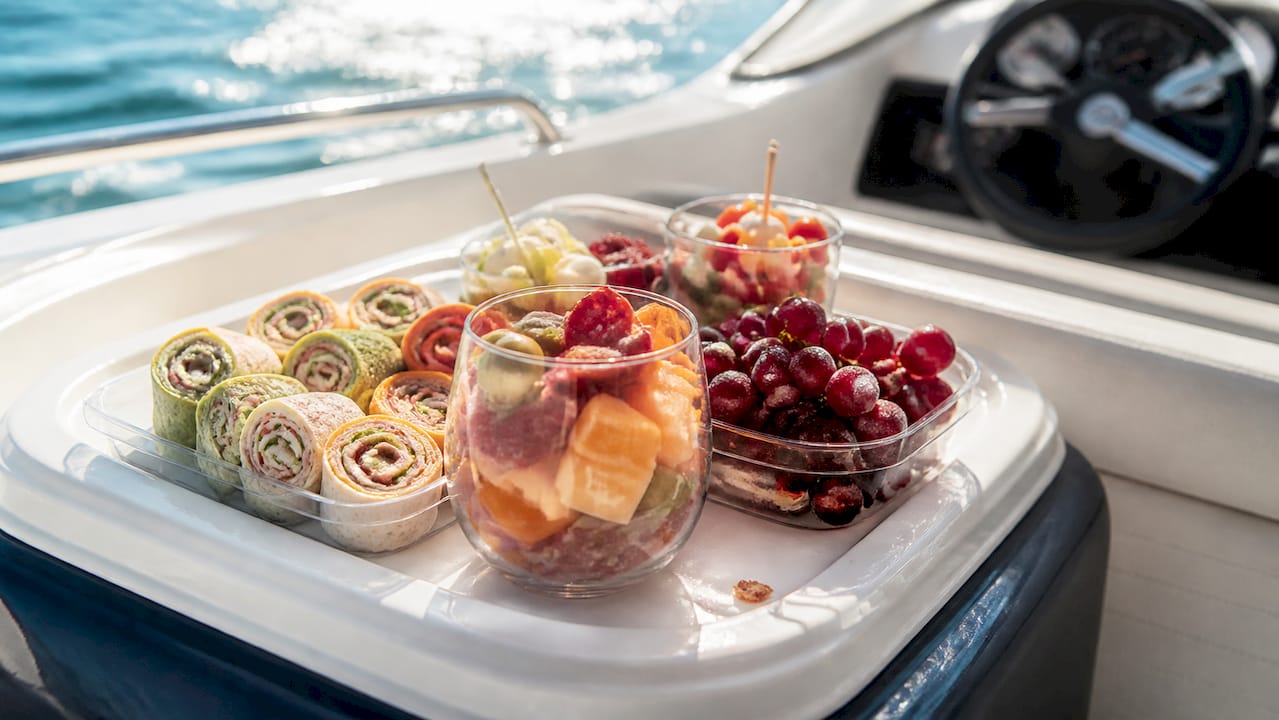
The best boat day snacks are no-mess finger foods: wraps and pinwheels, charcuterie cups, pre-portioned nuts, frozen grapes, and sturdy skewers. The single most important rule is to keep perishables in a dedicated food cooler, separated from the drink cooler, and lined with frozen water bottles instead of loose ice. That one habit keeps food safe for hours without turning your cooler into a slushy mess.
Grab-and-go essentials before you board:
Charcuterie cups or skewers (pre-assembled, chilled overnight)
Frozen grapes or pre-cut watermelon in sealed cups
Individual protein bars or meat sticks
Key Takeaways
The single most effective boat-day food strategy is separating your food cooler from your drink cooler and lining it with frozen water bottles.
Point | Details |
Two-cooler rule | Keep food and drinks in separate coolers to protect perishable items from temperature spikes. |
Best snack categories | No-mess finger foods: wraps, charcuterie cups, skewers, frozen grapes, and pre-portioned nuts. |
Hydration target | Plan 32–64 ounces of water per person for a four-hour trip on the water. |
What to skip | Avoid glass containers, soft cheeses, open chip bags, paper plates, and heavily sauced foods. |
Pcbprestige option | Book a private tour and let a licensed captain handle navigation while you focus on the snacks and the dolphins. |
Table of Contents
1. The best boat day snacks, ranked by how well they hold up
The categories below are organized by how they perform under real boat conditions: heat, wind, motion, and one-handed eating. Each entry includes why it works and one packing tip you can use immediately.
Wraps and pinwheels
Tightly rolled wraps beat traditional sandwiches every time on the water. Soft bread absorbs moisture and falls apart; a flour tortilla holds its shape for hours. Slice wraps into pinwheels the night before and store them flat in a sealed container. They’re easy to grab with one hand and leave almost no crumbs.
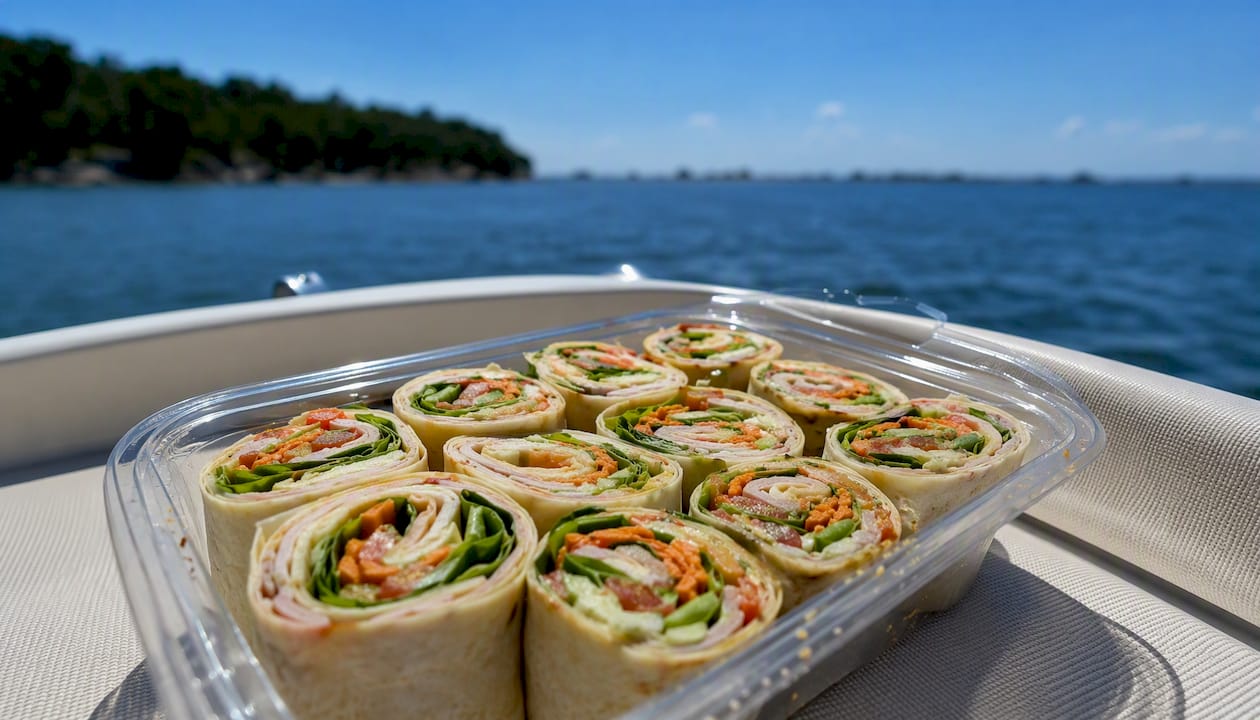
Packing tip: Stack pinwheels cut-side up in a wide, flat container with a locking lid. They stay intact and are easy to serve without utensils.
Charcuterie cups
Individual charcuterie cups outperform shared boards on a moving boat. A shared board tips, slides, and exposes soft cheeses to heat. Cups stay upright, keep portions controlled, and look genuinely impressive for a private tour or a bachelorette boat day celebration.
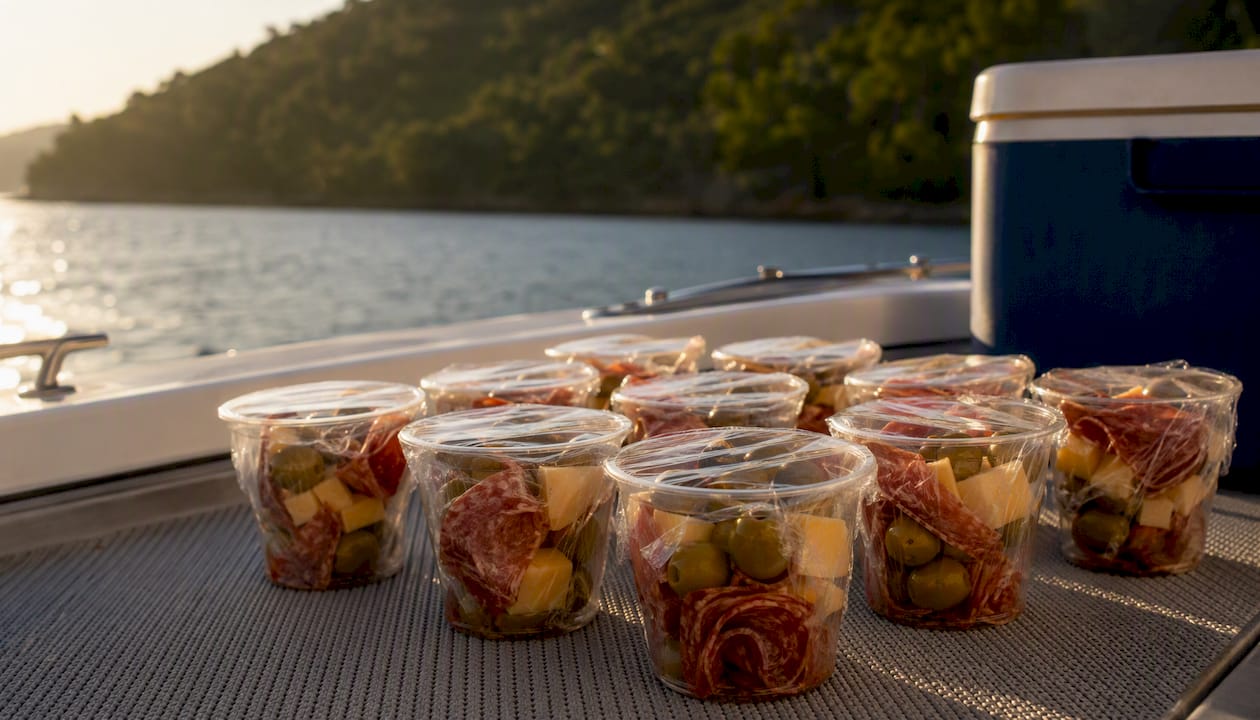
Packing tip: Use small mason jars or 4-oz plastic cups. Layer hard salami, hard cheese cubes, and a few olives. Seal with plastic wrap and refrigerate overnight.
Caprese or tortellini skewers
Skewers are one of the cleanest snacks you can bring aboard. Thread cherry tomatoes, fresh mozzarella, and basil for caprese, or use cooked tortellini with salami and a basil leaf. Pull them from the cooler 10–15 minutes before serving so the cheese isn’t ice-cold.
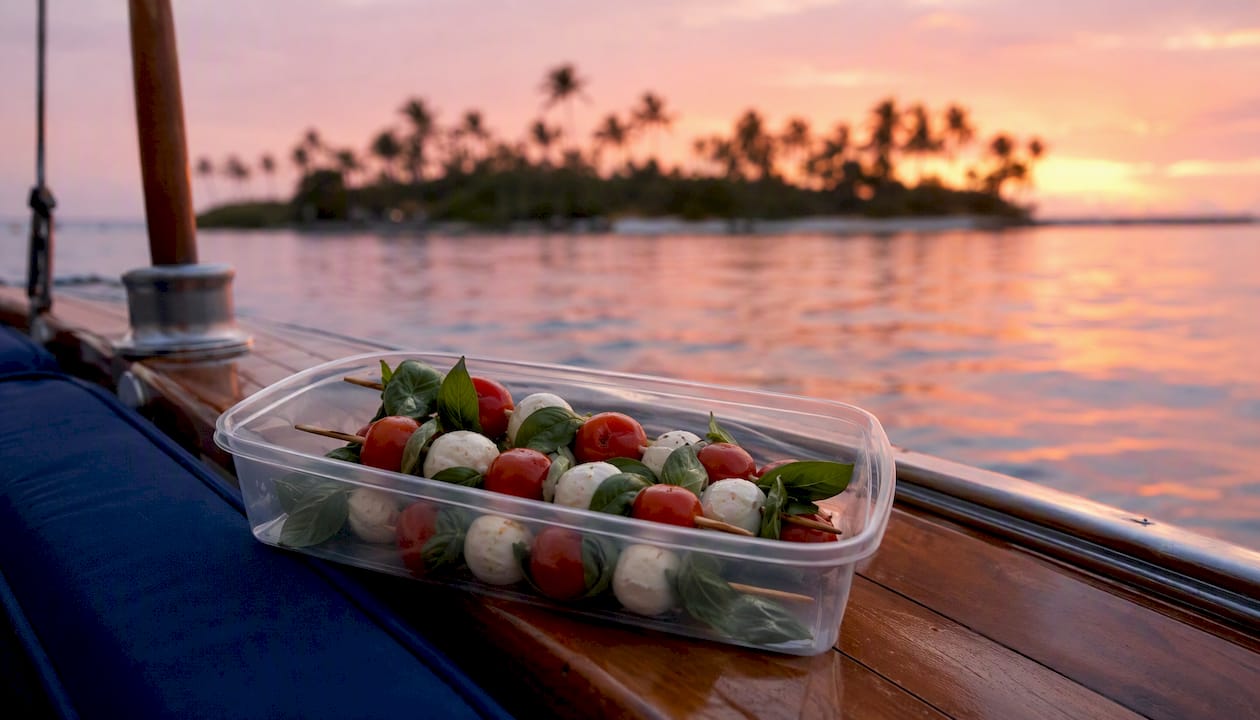
Packing tip: Lay skewers flat in a sealed container so they don’t topple. Drizzle balsamic glaze just before serving, not before packing.
Mini sliders
Make-ahead mini sliders hold up well in a cooler and are crowd-pleasers for groups of all ages. Use King’s Hawaiian rolls, which are dense enough to resist sogginess. Assemble with a thin layer of condiment and wrap each slider individually in parchment.
Packing tip: Wrap sliders in parchment paper and pack in a zip-lock bag. Keep them in the food cooler until ready to serve.
Frozen grapes
Frozen grapes are one of the best snacks for boating, full stop. They stay cold for a long time after leaving the cooler, act as a palate cleanser, and are naturally sweet without any packaging waste. Kids love them. Adults do too.
Packing tip: Freeze a full bunch the night before, then break into small clusters and store in a sealed bag. They double as a mild cooler booster.
Pre-cut watermelon in sealed cups
Watermelon is hydrating and refreshing, but a whole melon on a boat is a disaster waiting to happen. Pre-cut cubes in individual sealed cups solve that. No knife, no juice running everywhere, no mess.
Packing tip: Use 8-oz deli containers with snap lids. Pack them near the top of the food cooler for easy access.
Hard cheese cubes
Hard cheeses like cheddar, gouda, and manchego hold up in heat far better than brie or camembert. Cut into bite-sized cubes the night before and store in a small sealed container. They pair well with crackers or meat sticks and require zero prep on the boat.
Packing tip: Avoid pre-sliced cheese; cubes stay fresher longer and are easier to eat one-handed.
Meat sticks and jerky
Shelf-stable, high-protein, and zero refrigeration needed. Meat sticks and jerky are the ultimate backup snack when the cooler gets low on ice. They’re also a solid option for longer trips where you want something filling between meals.
Packing tip: Pack in a small zip-lock bag or leave in original packaging. No container needed.
Individual hummus cups with baby carrots
Pre-portioned hummus cups (the kind you find at any grocery store) are perfect for boating because the dip is already contained. Pair with baby carrots or celery sticks in a small sealed bag. No bowl, no spoon, no mess.
Packing tip: Keep hummus cups in the food cooler. Serve carrots in a small zip-lock bag on the side.
Trail mix and nuts
Pre-portioned into single-serve containers, trail mix and mixed nuts are shelf-stable, filling, and easy to eat between activities. The key word is pre-portioned. A shared bag of nuts on a windy deck is a recipe for snacks scattered across the water.
Packing tip: Use small resealable bags or 2-oz portion cups. One per person, packed in a dry bag or small tote.
Protein bars and granola bars
Protein bars are the most reliable backup snack on any boat trip. They don’t need refrigeration, they don’t melt (most of them), and they keep energy levels steady during snorkeling or swimming. Choose bars with a firm coating rather than a chocolate-dipped base, which melts fast in direct sun.
Packing tip: Keep bars in a dry bag or the side pocket of a backpack, not in the cooler.
Quiche bites and pizza muffins
These make-ahead finger foods travel well and feel more substantial than chips or crackers. Bake a batch the night before, let them cool completely, and pack in a flat sealed container. They hold up in a cooler for a full day and reheat quickly if you have access to a galley.
Packing tip: Cool completely before packing to avoid condensation inside the container.
Fruit kabobs
Thread strawberries, grapes, melon cubes, and pineapple chunks onto short skewers for a kid-friendly, no-drip fruit option. Unlike a fruit salad, kabobs don’t release juice into the container. They’re also visually appealing for group photos.
Packing tip: Use 6-inch bamboo skewers and store flat in a sealed container. Keep chilled until serving.
Crackers with individual dip packets
Sturdy crackers (think Triscuits or Wasa crispbreads) paired with individual guacamole or cream cheese packets give you a satisfying crunchy snack without the mess of an open dip bowl. The individual packets mean no double-dipping and no spills.
Packing tip: Pack crackers in a hard-sided container to prevent crushing. Keep dip packets in a small zip-lock bag.
Squeeze-pack nut butter with apple slices
Individual squeeze packs of almond or peanut butter paired with pre-sliced apple in a sealed bag are filling, portable, and mess-free. The squeeze pack eliminates the need for a knife or spoon. Dip, eat, done.
Packing tip: Toss a lemon wedge in with the apple slices to prevent browning.
How to pack your cooler and keep food safe all day
The cooler setup is where most boat trips go wrong. People pack everything into one cooler, open it constantly for drinks, and wonder why their food is warm by noon.
The two-cooler rule: Use one cooler exclusively for food and one for drinks. The drink cooler gets opened constantly; the food cooler should stay closed as much as possible. This single habit extends safe food temperature by hours.
Line the food cooler with frozen water bottles instead of loose ice. They last longer, don’t create a pool of water that soaks your food, and give you cold drinking water as they thaw. Block ice works similarly and melts slower than cubed ice.
Cooler layering: Place frozen items and items that need the most cold (raw proteins, dairy) at the bottom. Chilled items like fruit cups and cheese go in the middle. Snacks you’ll access first go on top. Use wide, flat containers with locking lids so nothing shifts during transit.
Hydration note: Plan on 32–64 ounces of water per person for a four-hour trip. Sun, salt air, and physical activity all increase fluid loss faster than most people expect.
Pro Tip: Designate one person as the “food custodian” for the trip. They manage cooler access, keep the lid closed between servings, and track when perishables need to come out. It sounds formal, but it prevents the slow-creep temperature problem that ruins food by hour three.
Supply | Role | Notes |
Frozen water bottles | Long-lasting cold source + drinking water | Replace loose ice; thaw into drinkable water |
Block ice | Sustained cooling for full-day trips | Melts slower than cubed ice |
Gel ice packs | Supplemental cold for smaller containers | Reusable; good for snackle boxes |
Wide flat containers with locking lids | Prevent spills and keep items organized | Low center of gravity reduces tipping |
Separate drink cooler | Protects food cooler temperature | Open frequently without warming food |
Keep coolers in the shade whenever possible. On a sunny pontoon or powerboat, a cooler sitting in direct sun loses temperature significantly faster. Swap ice mid-day if you’re out for six hours or more.
What to leave behind: foods that cause problems on a boat
Some foods are fine on a picnic blanket and a disaster on a moving boat. Here’s what to skip:
Ice cream scoops or soft-serve: Melts within minutes, stains everything, and attracts insects. Swap for frozen fruit bars or frozen grapes.
Open-sauced foods (BBQ ribs, saucy wings): Sauce ends up on hands, seats, and life jackets. Swap for dry-rub options or pre-portioned sauced items in sealed cups.
Soft cheeses (brie, camembert, ricotta): They melt and spread in heat and become a food-safety risk quickly. Use hard cheese cubes instead.
Open chip bags: Wind turns an open bag into a snack explosion. Pre-portion into sealed cups or use individual snack bags.
Glass containers: A glass jar breaking on a boat deck is a serious safety hazard. Use plastic or silicone containers exclusively.
Oily pastries and sticky desserts: Baklava, glazed donuts, and similar items leave residue on everything they touch. Swap for individually wrapped cookies or protein bars.
Messy condiments in open bottles: Ketchup and mustard squeeze bottles tip and spill. Use individual condiment packets instead.
Paper plates: They catch wind and become frisbees. Use cloth napkins tucked in a sealed bag and reusable plates with a lip.
How to build a snackle box for your boat trip
A snackle box is a tackle box repurposed as a snack organizer. It’s one of the best ideas for small-group boat trips because it keeps everything visible, portioned, and contained.
Step-by-step:
Choose your container. A medium tackle box with multiple compartments works well for one to two people. For a group, use a larger divided container or multiple individual boxes.
Add a gel ice pack to the bottom of the box or underneath it in a small cooler bag. This keeps temperature-sensitive items like cheese cubes and hummus cups safe.
Fill compartments by category. One section for protein (meat sticks, cheese cubes, hard-boiled eggs), one for fruit (grapes, berries, apple slices), one for crunch (crackers, pretzels, nuts), and one small section for a treat (a wrapped cookie, a square of dark chocolate).
Seal and label. Use a small piece of tape to label each box if you’re packing for multiple people with different dietary needs.
Pack a napkin and a fork or toothpick inside the lid or in a small zip-lock bag attached to the handle.
Assemble the night before for everything except fresh-cut fruit, which you can add in the morning.
Single-person box example: 2 meat sticks, 4 hard cheese cubes, a small handful of grapes, 6 crackers, 1 hummus cup, 1 wrapped protein bar.
Group box example (serves 4–6): A larger divided container with charcuterie cups, fruit kabobs, individual nut bags, crackers, and a small treat section. Pull from the food cooler 10–20 minutes before serving so items aren’t ice-cold.
Pro Tip: Assemble everything the night before except items that brown or wilt quickly (apple slices, cut avocado). Morning-of, add those fresh items and tuck in a small ice pack. The whole process takes under five minutes.
Dietary swaps and kid-friendly options that stay mess-free
Most boat-friendly snacks adapt easily to common dietary needs without sacrificing the no-mess format.
Dietary swaps:
Meat sticks → plant-based jerky (same shelf-stable, one-handed format)
Regular flour tortillas → gluten-free tortillas for wraps and pinwheels
Peanut butter squeeze packs → sunflower seed butter packs (nut-free and school-safe)
Hard cheese cubes → dairy-free hard cheese alternatives for vegan guests
Standard crackers → rice crackers or seed-based crackers for gluten-free needs
Kid-friendly ideas:
Fruit kabobs on short, blunt-tipped skewers (no sharp points)
Individually portioned cups of grapes, berries, or watermelon cubes
Squeeze packets of nut or seed butter with pretzel dippers
Mini cheese rounds (Babybel-style) in their wax coating, which keeps them fresh without refrigeration for a few hours
Animal crackers or graham crackers in individual snack bags
Allergy-safe packing: Use clearly labeled separate containers for any allergen-free items. Designate one section of the cooler as the allergy-free zone and make sure everyone in the group knows which containers are off-limits for cross-contact. For snacks allowed on specific local tours, the Crab Island snack guidelines offer a useful local reference.
What to bring vs. what to leave behind
Bring | Why |
Frozen water bottles | Long-lasting cold + drinking water as they thaw |
Sealed snack containers | Prevent spills and wind scatter |
Cloth napkins in a zip-lock bag | Won’t blow away; reusable |
Reusable cups with lids | Spill-resistant; no paper waste |
Sealable trash bag | Easy cleanup; keeps the boat clean |
Wet wipes or hand sanitizer | No sink access mid-trip |
Sunscreen-safe snacks (finger foods) | Avoid touching greasy food after applying sunscreen |
Individual condiment packets | No tipping bottles |
Leave Behind | Why |
Glass containers | Breakage is a safety hazard on deck |
Open chip bags | Wind scatters them instantly |
Soft cheeses (brie, camembert) | Melt fast; food-safety risk |
Paper plates | Catch wind; become litter |
Ice cream scoops | Melt and stain |
Open condiment bottles | Tip and spill |
Heavily sauced foods | Stains seats and gear |
What Pcbprestige guests should know about snacks on board
Pcbprestige runs private tours on a 26-foot powerboat with a licensed captain, accommodating up to six guests at a time. That setup changes the snack equation in a few practical ways.
Storage space is available but limited on a 26-foot vessel. Flat, stackable containers are far easier to manage than bulky coolers or oversized bags.
The boat has a bathroom onboard, which means guests don’t need to rush back to shore for restroom breaks. That makes longer snacking windows realistic.
The captain manages the itinerary, so guests can focus on eating, watching dolphins, and snorkeling rather than navigating. Bring snacks you can eat with one hand while watching wildlife.
Ethical wildlife interactions are a priority on every Pcbprestige tour. That means no feeding dolphins or marine animals, and no throwing food waste overboard. Pack a sealable trash bag and use it.
For guests who want a fully turnkey experience without worrying about food logistics, the intake form allows you to flag dietary preferences or special requests before your tour.
For families checking out upscale boat tours near 30A, elevated snack options like charcuterie cups and skewers fit the experience well and photograph beautifully against the Gulf backdrop.
The snack mistake most people make on the water
The most common boat-day food mistake is packing everything into one cooler and opening it every five minutes for drinks. By hour two, the food is warm and the ice is half-melted. The fix is simple: two coolers, always. One for drinks that everyone raids freely, one for food that stays closed until it’s time to eat.
The second most common mistake is packing snacks that require two hands or a plate. On a moving boat, you need one hand for balance. Anything that requires a fork, a bowl, or a flat surface to eat is going to end up on someone’s lap.
Skip the snack stress and book a private tour with Pcbprestige
Planning snacks is the fun part of a boat day. The logistics of getting to Shell Island, finding dolphins, and snorkeling safely in Panama City Beach? That’s where a private captain makes the difference.
Pcbprestige offers fully private dolphin watching, Shell Island snorkeling, and sunset cruises for up to six guests on a 26-foot powerboat with a licensed local captain. You bring the snackle box; they handle everything else: the route, the wildlife, the safety gear, and all snorkeling equipment. No crowded group tours, no strangers, no guesswork about where to go.
Book your private tour and spend your energy on the snacks, not the logistics.
Sources
Recommended
Comments