Are Dolphins Dangerous? A Practical Safety Guide
- PCB Prestige

- Aug 6
- 8 min read
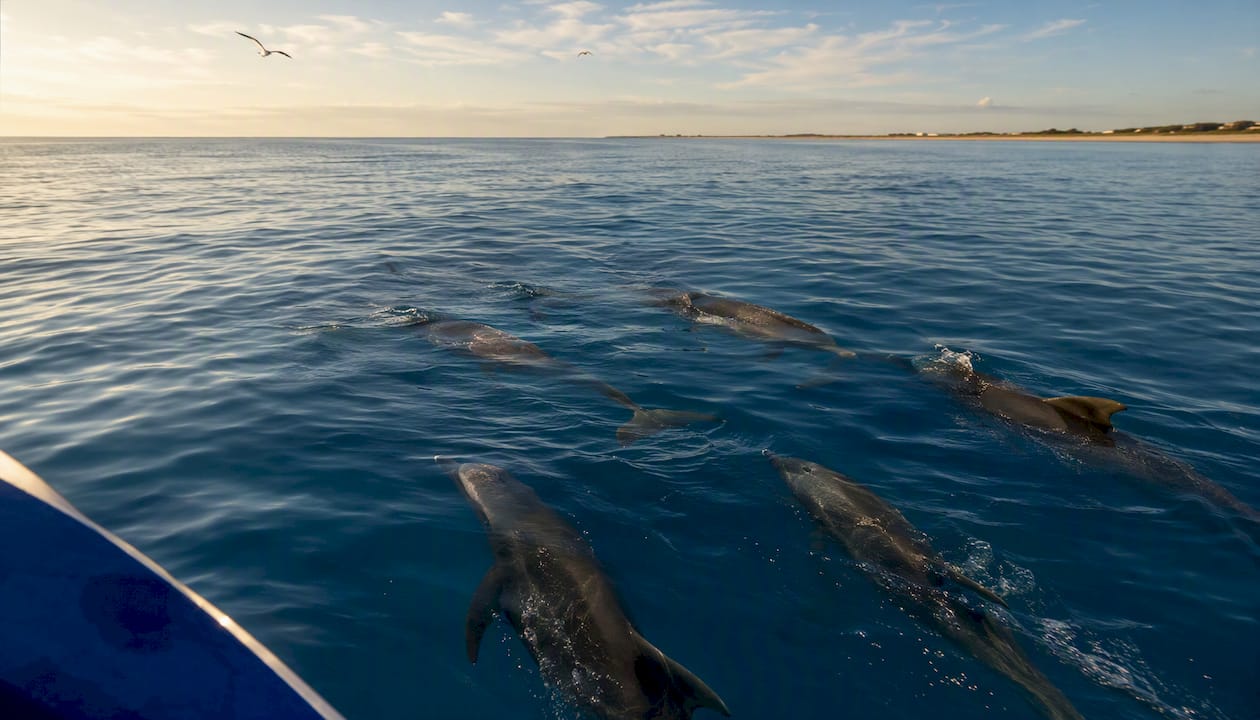
Wild dolphins can absolutely be dangerous to people in certain situations. Fatal attacks are extremely rare, but documented injuries, bites, and hospitalizations do occur, and the risk goes up sharply when people feed, approach, or try to touch them.
Here is what you need to know before you get in the water:
Risk is real but context-dependent. Most injuries happen when people initiate close contact, not during passive observation.
Feeding is the single biggest trigger. NOAA documents dozens of bite incidents tied directly to people feeding or approaching wild dolphins.
Official distance rules exist. NOAA recommends staying at least 50 yards (150 feet) away, and feeding or harassing wild dolphins is illegal under U.S. federal law.
Table of Contents
Are dolphins dangerous? What the evidence actually shows
The popular image of dolphins as universally gentle, Flipper-style companions is a media invention. Scientists and multiple outlets have documented the gap between that portrayal and how dolphins actually behave: they are intelligent, social predators with teeth, significant body mass, and complex social hierarchies that include aggression.
That said, severe or fatal wild dolphin attacks on humans are genuinely rare. Most encounters are non-lethal. The cases that turn serious almost always involve a specific trigger: feeding, intentional close approach, or an animal that has been conditioned by repeated human contact.
One of the clearest illustrations came from Japan, where at least 18 bite incidents were attributed to a single solitary bottlenose dolphin over a period of weeks. Experts suggested the animal was seeking social contact as a substitute for pod interaction, a pattern seen in isolated dolphins worldwide. The bites were not predatory in the traditional sense, but several swimmers still required medical attention.
Metric | Detail |
NOAA recommended viewing distance | a safe distance minimum |
Japan incident series | multiple reported bites from one solitary dolphin |
U.S. legal status of feeding/harassment | Illegal under the Marine Mammal Protection Act |
Severity profile | Most incidents non-lethal; severe cases tied to feeding or captivity |
The pattern is consistent across documented cases: the closer and more interactive the human behavior, the higher the injury risk.
Why dolphins can hurt you even when they are not “attacking”
Bottlenose dolphins weigh between 300 and 1,400 pounds depending on age and sex, swim at speeds up to 20 mph, and carry conical teeth designed to grip slippery fish. None of that disappears because a dolphin seems curious or playful.
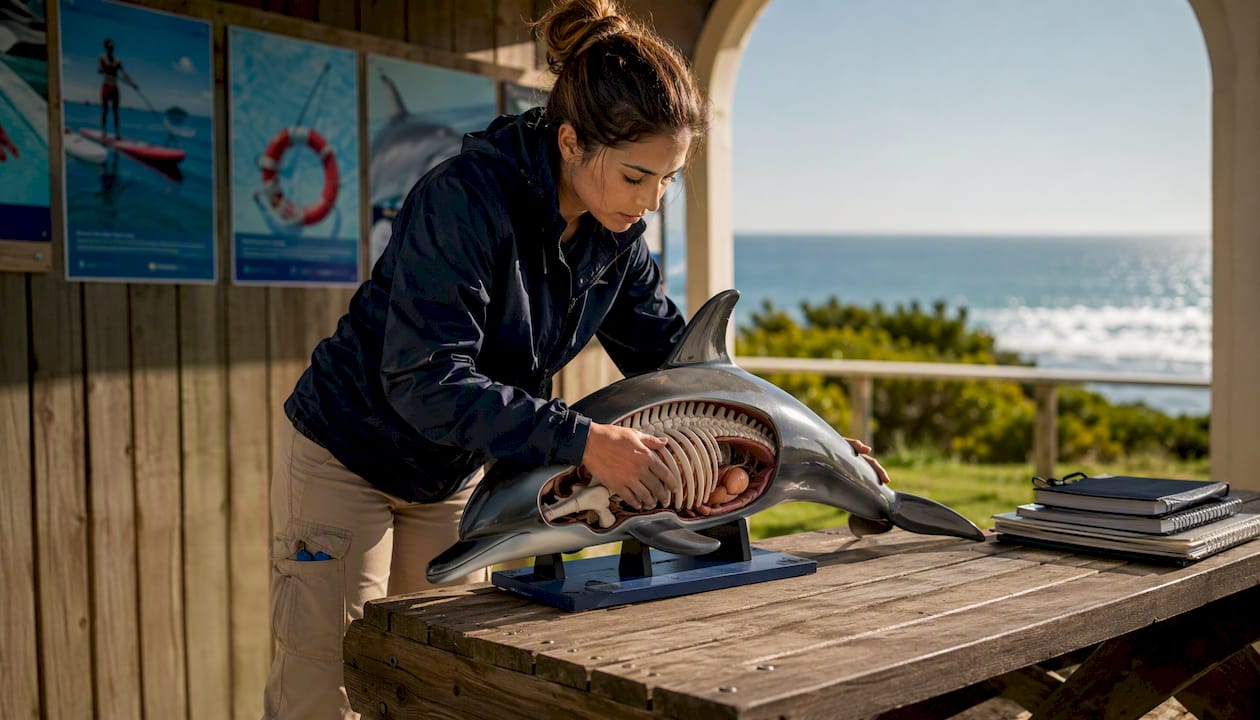
The behavior that injures most people is not predatory aggression. Marine scientists note that dolphins lack hands, so they use biting and body contact to explore and communicate. What is a normal social gesture inside a dolphin pod can break skin or fracture a bone when directed at a human. A dolphin “mouthing” your arm is doing something entirely ordinary in its world. Your arm is not built for it.
Other behavioral mechanisms that raise risk:
Sexual aggression. Male dolphins can become sexually aggressive toward swimmers, particularly in areas where they have been habituated to human presence.
Social play-biting. Young dolphins especially use biting to establish social rank and explore their environment.
Defensive behavior near calves. A mother dolphin protecting a calf will charge, rake with teeth, or use her rostrum as a battering ram.
Habituation from feeding. Animals conditioned by food handouts lose their natural wariness of boats and people, and can turn aggressive when expected food does not appear.
Pro Tip: If a dolphin is swimming in tight circles around you, slapping the water with its tail, or arching its back repeatedly, those are stress or agitation signals, not invitations to get closer. Understanding dolphin communication cues before you enter the water is one of the most practical things you can do.
When is the risk of a dolphin encounter highest?
Certain situations reliably produce the worst outcomes. Knowing them is half the battle.
Feeding wild dolphins is the top risk factor, full stop. NOAA documents that feeding changes dolphin behavior in ways that increase propeller injuries, entanglement, and direct aggression. Animals that become conditioned by handouts lose their avoidance of boats and people, and they can behave aggressively when food expectations go unmet. It is also a federal crime.
Swimming with wild pods puts you inside a social structure you cannot read. Dolphins establish rank through physical contact, and an unfamiliar body in the water can trigger defensive or dominance behavior from any member of the group.
Approaching calves is one of the fastest ways to provoke a response. Mothers are protective, and other pod members will often back them up. Even experienced boaters give calf groups a wide berth.
Solitary “sociable” dolphins are a specific and underappreciated risk. A lone dolphin that actively seeks out swimmers is often socially isolated or injured, and experts note that these animals sometimes substitute human interaction for pod contact. Their behavior is unpredictable in ways a healthy pod animal’s is not.
Captive or conditioned animals present a different risk profile. Dolphins in captivity or those heavily conditioned by human feeding have lost the behavioral boundaries that keep wild encounters relatively safe. Incidents in these settings tend to be more severe.
For a deeper look at swimming safely with wild dolphins in Florida, the practical guidance there covers local conditions specifically.
How to stay safe around dolphins
These rules apply whether you are in the water, on a paddleboard, or on a boat.
Stay 50 yards back. NOAA’s Marine Life Viewing Guidelines set 50 yards (150 feet) as the minimum safe viewing distance. That is roughly the length of half a football field.
Never feed wild dolphins. It is illegal under the Marine Mammal Protection Act and directly increases your risk of injury.
Do not touch, chase, or attempt to ride them. These actions are both prohibited and genuinely dangerous.
If a dolphin approaches you, move away calmly. Do not reach out, do not make sudden movements, and exit the water if the animal continues to close the distance.
Keep children and pets out of the water near wild pods. Smaller bodies are harder for dolphins to read as non-threatening.
Report feeding or harassment you witness. NOAA violations can be reported to the agency’s enforcement line.
NOAA’s 50-yard rule is not a suggestion. Violations of the Marine Mammal Protection Act carry federal penalties, and enforcement has increased in high-traffic coastal areas.
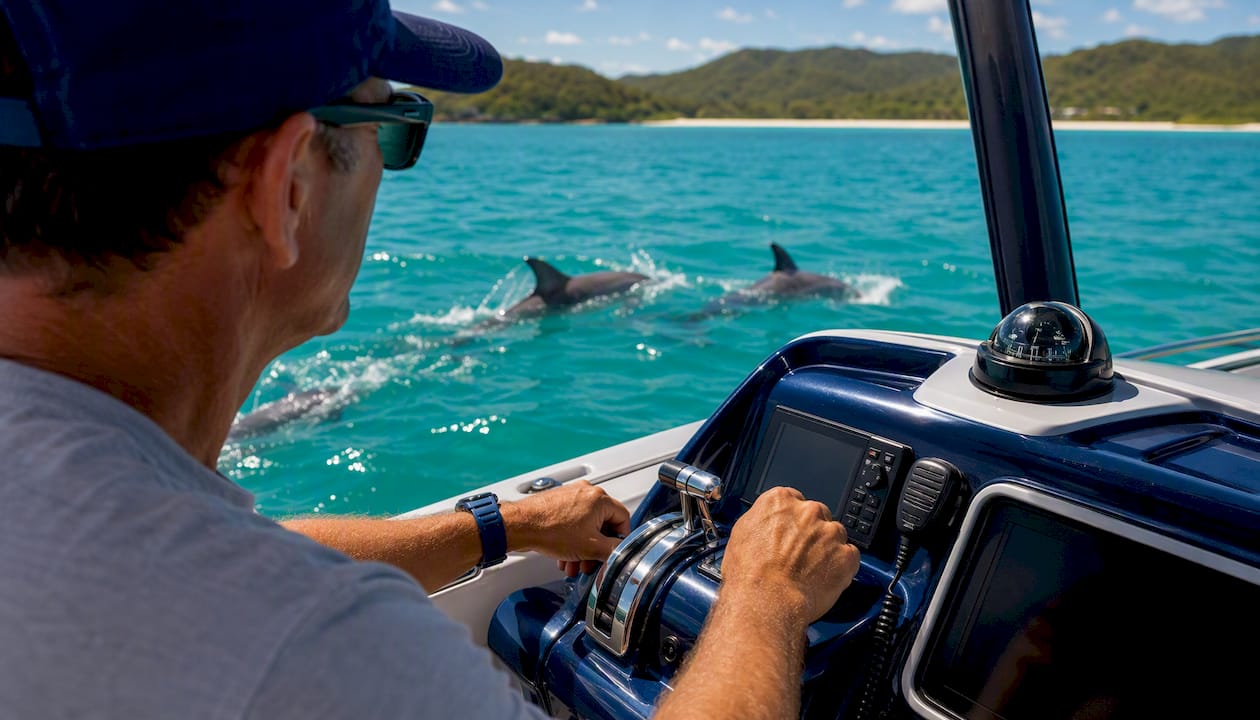
For boaters specifically: reduce speed when dolphins are nearby, never chase a pod to keep up with it, and cut the engine when safe if dolphins approach the bow. Propeller injuries to conditioned dolphins are well-documented and entirely preventable.
Pro Tip: If you are captaining a vessel and dolphins begin bow-riding, let them lead. Accelerating to keep them engaged is exactly the behavior that conditions animals to seek out boats, which raises their long-term injury risk.
Are dolphins more dangerous than sharks?
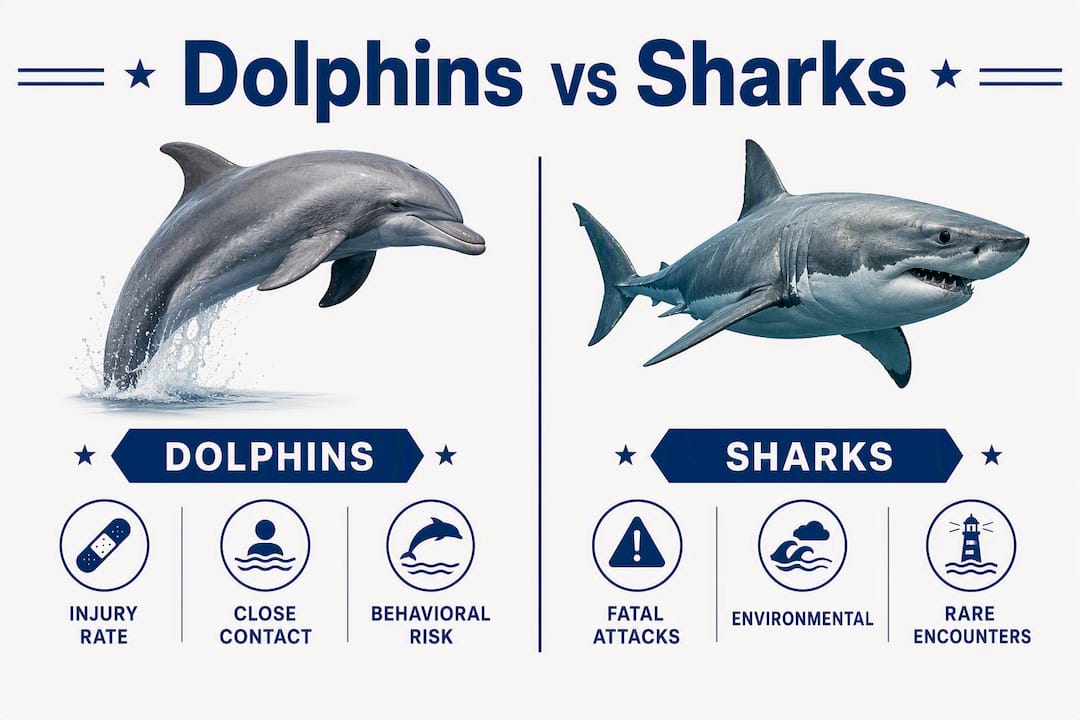
Short answer: sharks cause more fatal attacks, but dolphins injure more people in close-contact scenarios.
Dimension | Dolphins | Sharks |
Likelihood of incident | Low overall; rises sharply with close contact or feeding | Low overall; tied to specific environments and behaviors |
Typical severity | Usually non-fatal; bites, bruising, occasional hospitalization | Higher fatality rate per incident |
Most common scenario | Human-initiated contact, feeding, swimming with pods | Mistaken identity, murky water, near fishing activity |
Recommended behavior | Stay 50 yards back; never feed or touch | Avoid dawn/dusk swimming, stay out of murky water, no jewelry |
U.S. legal restrictions | Marine Mammal Protection Act prohibits feeding/harassment | No equivalent federal restriction on human behavior |
The key difference is context. Shark incidents are largely environmental: wrong place, wrong time. Dolphin incidents are largely behavioral: people doing something that triggers a response. That means dolphin risk is more controllable, but only if you actually change your behavior.
How do you choose an ethical dolphin tour?
Not all dolphin tours operate the same way, and the difference matters for both your safety and the animals’ welfare. Here is what to look for.
Signs of an ethical operator:
Licensed captain with local knowledge of the specific waterway
Small group size (six guests or fewer per vessel)
Written or verbal commitment to NOAA viewing distance guidelines
No feeding, no chasing, no promises of “swimming with” wild dolphins
Educational briefing before departure
Refusal to enter areas with calves or nursing groups
Questions worth asking before you book:
Do you intentionally approach or feed dolphins to keep them near the boat?
What is your policy if a pod moves away from us?
How many guests share the boat?
Is your captain licensed, and does the tour follow NOAA guidelines?
What happens if we encounter a calf group?
A good operator will answer all five without hesitation. An operator who hedges on the feeding question or promises guaranteed close contact is telling you something important about how they run their tours. For context on what responsible tourist activity best practices look like in the broader Gulf Coast region, that resource covers the standard well.
The bottlenose dolphins of Panama City Beach have specific behavioral patterns worth understanding before you get on the water locally.
Key Takeaways
Dolphins are capable of injuring people, but almost every serious incident traces back to a specific human behavior that can be avoided.
Point | Details |
Risk is real and situational | Dolphins can bite, charge, and injure; risk spikes with feeding, close approach, or calf encounters. |
NOAA’s 50-yard rule | Stay at least 50 yards (150 feet) from wild dolphins; feeding or harassment is a federal offense. |
Behavior, not predation | Most injuries come from social behaviors like play-biting, not deliberate attacks on humans. |
Solitary dolphins are higher risk | Isolated animals seeking human contact behave unpredictably and account for multiple incident series. |
Pcbprestige’s approach | Private, captain-led tours in Panama City Beach follow NOAA guidelines with small groups and no feeding. |
The case for private, ethical tours
The “Flipper myth” does real damage. It sends people into the water expecting a cooperative, friendly animal and leaves them unprepared for what dolphins actually are: powerful, socially complex predators with their own rules. The result is not usually a fatal attack. It is a bite that required stitches, a bruised rib from a rostrum strike, or a conditioned animal that now approaches every boat looking for a handout and eventually gets hit by a propeller.
What actually reduces risk is not avoiding dolphins entirely. It is understanding them accurately and choosing interactions structured around that understanding. Small groups, licensed captains, no feeding, and a genuine commitment to distance guidelines are not just ethical choices. They are the practical conditions under which encounters stay safe for everyone involved.
The operators who promise guaranteed close contact or let guests feed dolphins are not offering a better experience. They are offloading the risk onto the animal and onto you.
See dolphins safely with Pcbprestige
Pcbprestige runs private dolphin watching and snorkeling tours out of Panama City Beach on a 26-foot powerboat with a licensed local captain and a maximum of six guests. Every tour follows NOAA viewing guidelines: no feeding, no chasing, no direct contact promises.
The difference between a Pcbprestige tour and a crowded group boat is not just comfort. It is the ability to slow down, watch dolphins behave naturally, and leave knowing you did not contribute to the habituation problem. All snorkel equipment is included, itineraries are flexible, and the captain adjusts the route based on where animals are, not where they have been baited to be. If you are ready to book a private tour in Panama City Beach, the booking page has current availability.
This article is general information, not professional legal or safety advice. For current regulations, consult NOAA Fisheries or a qualified marine professional.
Useful sources
NOAA Fisheries: Protect Wild Dolphins — the primary U.S. agency source for viewing distance rules, feeding prohibitions, and the Marine Mammal Protection Act.
NBC News: Lonely dolphin attacks in Japan — documented incident series with expert commentary on solitary dolphin behavior.
IFLScience: Are dolphins dangerous? — scientific summary of frequency and severity of human-dolphin incidents.
BBC: Dolphin behavior and public perception — expert analysis of the gap between media portrayals and real dolphin behavior.
ABC News: Why is a dolphin attacking beachgoers in Japan? — expert explanation of solitary dolphin social substitution behavior.
Recommended
Comments